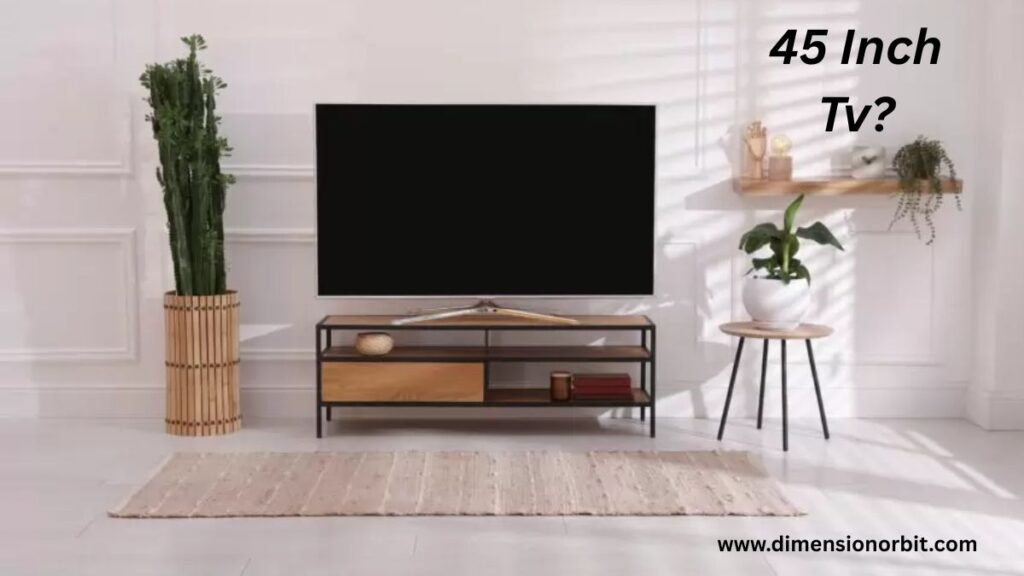
Buying a TV feels easy until the tape measure comes out and reality hits. Suddenly, “Will it fit?” becomes the main character. That’s exactly why people obsess over 45 inch TV dimensions. On paper, 45 inches sounds polite and manageable. In real life, it can dominate a wall, bully a TV stand, or flirt dangerously with your bookshelf. The diagonal number on the box doesn’t tell the full story, and guessing usually ends in regret. This guide exists to save you from awkward returns, crooked wall mounts, and that moment when you realize the TV is wider than the furniture meant to hold it. Let’s measure before we panic.
What Does “45 Inches” Really Mean on a TV?
Let’s start with the truth most buyers learn too late.
A 45 inch TV size refers only to the diagonal measurement of the screen, measured corner to corner. It does not describe the width, height, or depth of the TV.
That diagonal measurement comes from old television standards, and while it’s still used today, it’s also misleading if you’re planning space.
In real life, width and height matter far more than the diagonal number.
TV Diagonal Measurement Explained (Without the Confusion)

Almost every modern television uses a 16:9 aspect ratio. That ratio determines how wide and tall the screen becomes once you know the diagonal length.
Because of that ratio:
- A 45 inch screen becomes much wider than most people expect
- The frame and stand add extra size beyond the screen itself
- Two TVs labeled “45 inch” can still differ slightly in overall size
This is why buyers ask:
- how wide is a 45 inch TV
- difference between screen size and TV size
- how to measure a TV correctly
45 Inch TV Dimensions (Width, Height, and Depth)

Here are the real
world averages you can expect from most brands.
45 Inch TV Dimensions in Inches
| Measurement | Size |
|---|---|
| Screen width | 39.2 inches |
| Screen height | 22.1 inches |
| TV height with stand | 24–25 inches |
| TV depth without stand | 2.2–2.8 inches |
| TV depth with stand | 8–10 inches |
These numbers reflect common LED and OLED models currently on the market.
45 Inch TV Dimensions in CM
If you measure in metric units, here’s the same data converted accurately.
| Measurement | Size |
|---|---|
| Screen width | 99.6 cm |
| Screen height | 56.1 cm |
| Height with stand | 61–64 cm |
| Depth without stand | 5.5–7.1 cm |
| Depth with stand | 20–25 cm |
Small variations happen between brands, mostly due to bezel thickness and stand design.
How Wide Is a 45 Inch TV in Real Life?

This is the measurement that causes the most trouble.
The 45 inch TV width is about 39 inches for the screen alone, but once you include the frame, most TVs end up closer to 39.5 to 40 inches wide.
That extra half inch matters if:
- Your TV stand is narrow
- You’re placing the TV between shelves
- You’re mounting it in a tight wall space
Always measure the space first. Eyeballing it leads to regret.
Screen vs Frame Dimensions (Why Bezels Matter)
Even “bezel less” TVs still have frames.
Typical bezels add:
- 0.3–0.6 inches to each side
- Slightly more at the bottom
That’s why screen size and TV size are not the same thing, and why measuring space before buying a TV is essential.
45 Inch TV Height: With Stand vs Without Stand
Height is where many buyers get surprised.
- 45 inch TV height without stand: 22 inches
- 45 inch TV height with stand: 24–25 inches
That extra height comes from the base, not the screen.
If your cabinet has shelves above it, this difference can make or break the fit.
Does the Stand Add Height to a TV?
Yes. Always.
Most stands add 2–3 inches of height. Some pedestal style bases add even more.
If vertical space is tight, always check:
- 45 inch TV dimensions without stand
- 45 inch TV dimensions with stand
Never assume they’re the same.
45 Inch TV Depth (Why “Slim” Isn’t Always Slim Enough)
Modern TVs look ultra thin from the side, but depth still matters.
Without Stand
- Around 2.2–2.8 inches
- OLED models are usually thinner than LED
With Stand
- Around 8–10 inches
- Depends on foot spacing and base design
This matters a lot for shallow TV cabinets and floating shelves.
45 Inch TV Dimensions With Stand vs Without Stand
Here’s a quick comparison that answers most fit questions instantly.
| Setup | Width | Height | Depth |
|---|---|---|---|
| Without stand | 39.2 in | 22.1 in | 2.5 in |
| With stand | 39.5–40 in | 24–25 in | 8–10 in |
If you’re wondering will a 45 inch TV fit on my stand, this table is your shortcut.
45 Inch TV Stand Width Requirement
A TV should never sit edge to edge on a cabinet.
Safe minimum stand width:
42–45 inches
This gives stability, visual balance, and room for accessories like soundbars.
Weight of a 45 Inch TV
Weight matters more than people expect, especially for wall mounting.
Average Weight
- Without stand: 22–26 lbs (10–12 kg)
- With stand: 25–30 lbs (11–14 kg)
Always check your mount’s rating and your drywall TV mount weight limit before installing.
Can a 45 Inch TV Be Wall Mounted?
Yes. Easily.
Most models support standard VESA mounting patterns, commonly:
- 200 × 200 mm
- 300 × 300 mm
45 Inch TV Wall Mount Size Tips
- Choose a mount rated for 40 lbs or more
- Leave 2–3 inches behind the TV for cables
- Mount at eye level for comfort
Eye Level TV Mounting Height (What Feels Right)
For most seating positions, the center of the screen should sit 42–48 inches from the floor.
This keeps your neck relaxed and makes long viewing sessions comfortable.
How Much Space Does a 45 Inch TV Need?
The TV itself isn’t the whole story.
Recommended Clearance
- Sides: 1–2 inches
- Top: 2 inches
- Back: 2–3 inches
This improves airflow and makes cable management easier.
Ideal Viewing Distance for a 45 Inch TV
Resolution changes how far you should sit.
- 4K TVs: 5.5–7.5 feet
- 1080p TVs: 7–9 feet
That makes a 45 inch TV a strong choice for bedrooms, apartments, and small living rooms.
Transporting and Moving a 45 Inch TV
It’s manageable, but still fragile.
Typical Box Size
- Width: 43–45 inches
- Height: 28 inches
- Depth: 6–8 inches
Will it fit in a sedan?
Sometimes. But it’s risky.
Keeping the original box makes moving far safer.
45 Inch TV vs Nearby Sizes
43 Inch vs 45 Inch TV
- Slightly wider screen
- More immersive for sports and gaming
- Minimal extra space needed
45 Inch vs 50 Inch TV
- 50 inch is noticeably wider
- Requires more viewing distance
- Often too large for compact rooms
This makes 45 inches a quiet middle ground.
Why 45 Inch TVs Are Less Common Today
Brands now focus on:
- 43 inch
- 50 inch
- 55 inch
Still, 45 inch models exist for buyers who want mid size TV dimensions without jumping too big.
Best TV Size for Small Living Rooms and Apartments
A 45 inch TV size guide often leads to the same conclusion.
This size works best if:
- Seating distance is under 8 feet
- Wall space is limited
- You want balance, not dominance
It’s especially practical for apartments and bedrooms.
Quick Reference: 45 Inch TV Measurements
| Feature | Measurement |
|---|---|
| Screen size | 45 inches (diagonal) |
| Width | 39–40 inches |
| Height (no stand) | 22 inches |
| Height (with stand) | 24–25 inches |
| Depth | 2.5 inches |
| Weight | 25–30 lbs |
TV Fit Checklist (Before Buying a TV)
Before you hit “Buy,” pause and check this list:
- Measure cabinet width and depth
- Confirm wall mount VESA pattern
- Check viewing distance
- Account for stand height
- Leave ventilation space
Most TV buying mistakes happen when one of these steps gets skipped.
Digital tool
Digital tools like Feet and Inches Calculator can convert inches to centimeters or feet instantly. Many smartphone apps now offer augmented reality measuring features, allowing you to gauge objects virtually and compare them to known lengths.
FAQs
What are the exact 45 inch TV dimensions?
A typical 45 inch TV dimensions setup measures about 39–40 inches wide, 22 inches tall without a stand, and 24–25 inches tall with a stand. Depth is usually 2.2–2.8 inches without the stand and 8–10 inches with the stand. Small differences happen between brands because of bezel and stand design.
How wide is a 45 inch TV in real life?
Most people expect it to be smaller than it actually is. The 45 inch TV width comes out to roughly 39 inches for the screen, and closer to 39.5 to 40 inches once the frame is included. Always measure your cabinet or wall space before buying.
What does 45 inches mean on a TV?
The 45 inches refers to the diagonal measurement of the visible screen, not the width or height. This is why two TVs with the same screen size can still take up different amounts of space in your room.
What are 45 inch TV dimensions in cm?
On average, a 45 inch TV dimensions in cm setup is about 99–100 cm wide, 56 cm tall without a stand, and 61–64 cm tall with a stand. Depth ranges from 5.5–7 cm without the stand to 20–25 cm with the stand.
Does the stand add height to a 45 inch TV?
Yes, always. Most stands add 2–3 inches of height. That’s why checking 45 inch TV dimensions with stand is important if your TV will sit on furniture rather than be wall mounted.
Will a 45 inch TV fit on my stand?
In most cases, yes, but only if your stand is wide enough. A 45 inch TV stand width requirement should be at least 42–45 inches to allow for stability and visual balance.
Can a 45 inch TV be wall mounted?
Yes. Almost all models support VESA mounting patterns, commonly 200×200 mm or 300×300 mm. As long as your mount is rated for the TV’s weight, wall mounting is safe and straightforward.
What is the ideal viewing distance for a 45 inch TV?
For a 4K TV, the ideal viewing distance is about 5.5–7.5 feet. For 1080p TVs, sitting slightly farther back at 7–9 feet provides a clearer picture with less visible pixel structure.
How much space does a 45 inch TV need around it?
You should leave 1–2 inches on each side, about 2 inches on top, and 2–3 inches behind the TV. This clearance helps with ventilation, cable routing, and overall safety.
How much does a 45 inch TV weigh?
The weight of a 45 inch TV usually falls between 22–26 lbs without the stand and 25–30 lbs with the stand. Always check your wall mount’s weight rating before installation.
Is a 45 inch TV good for a small room or bedroom?
Yes. A 45 inch TV size works very well in bedrooms, apartments, and small living rooms, especially when seating distance is under 8 feet. It provides an immersive experience without overwhelming the space.
Why are 45 inch TVs less common than 43 or 50 inch models?
Manufacturers focus more on 43, 50, and 55 inch sizes because of demand and production efficiency. Still, 45 inch TV screen size models exist for buyers who want a balanced, mid-size option.
How do I measure my space correctly before buying a 45 inch TV?
Measure the width, height, and depth of your cabinet or wall area. Then compare those numbers with the actual size of a 45 inch television, including the stand and recommended clearance. This step prevents fit issues after delivery.
Final Thought
A 45 inch TV looks modest on paper, but in real life, it fills more space than most people expect. Once you factor in the width, stand height, and clearance, those inches add up quickly. That’s why understanding 45 inch TV dimensions before buying matters more than the brand name or screen resolution.
Measure your space carefully. Think about viewing distance, furniture depth, and mounting height. When those details line up, a 45 inch TV fits beautifully, especially in bedrooms, apartments, and smaller living rooms.
Skip the guesswork. Plan the space. Do that, and your TV won’t just fit your room. It’ll feel like it belongs there.

Jhon AJS, the author of Dimension Orbit, is an experienced blogger fascinated by the mysteries of existence. He explores every type of dimension from scientific to spiritual with clarity and creativity. Jhon’s engaging writing style invites readers to think deeper, question reality, and discover new perspectives on the universe.