Buying a wide 60 inch TV feels a lot like ordering shoes online. On paper, everything looks perfect. Then it arrives, and suddenly you’re measuring walls, furniture, and doorways while wondering if you misread something important. The box says “60 inches,” your stand says “trust me,” and reality says, “Let’s do some math.” This is where most people get stuck. A 60 inch TV can feel massive, modest, or just right depending on how wide it actually is and where it’s going. Before you start rearranging furniture or blaming the manufacturer, this guide breaks down the real dimensions so your TV fits your space, not your regrets.
What “60 Inches” Actually Measures
The term 60 inch TV size refers to the diagonal measurement of the visible screen. Manufacturers measure from one corner of the screen to the opposite corner. This method has been standard for decades, yet it continues to mislead buyers.
The diagonal number does not describe the width. It does not describe the height. It does not include the stand or the frame thickness. Because modern TVs use a 16:9 aspect ratio, the diagonal measurement becomes a mathematical reference point rather than a physical width.
This distinction matters because most real-world problems come down to width. Furniture, wall space, and doorways all care about horizontal measurements. Diagonal numbers do not help with any of those.
How Wide Is a 60 Inch TV Exactly
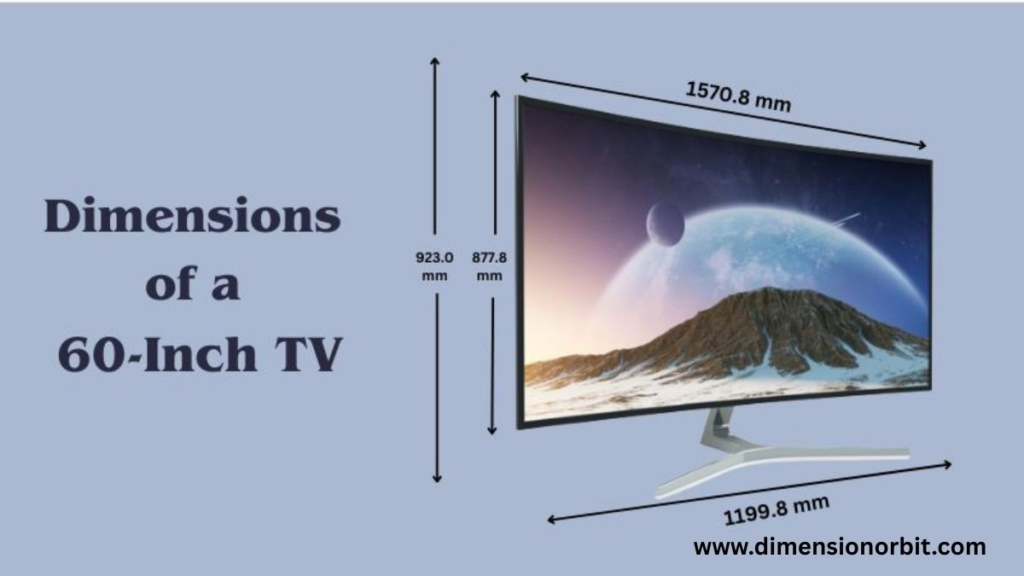
Using the standard 16:9 aspect ratio, the exact width of a 60 inch TV screen measures approximately 52.3 inches, which equals about 133 centimeters. This measurement represents the visible screen area only.
Once you factor in bezel thickness, the total width increases slightly. Most modern models measure between 53 and 54 inches wide from edge to edge. Ultra thin bezels sit closer to the lower end, while thicker frames push the width higher.
This means any surface supporting the TV must exceed 53 inches to avoid overhang. A stand narrower than this creates instability and looks visually awkward.
60 Inch TV Width and Height in Real Measurements
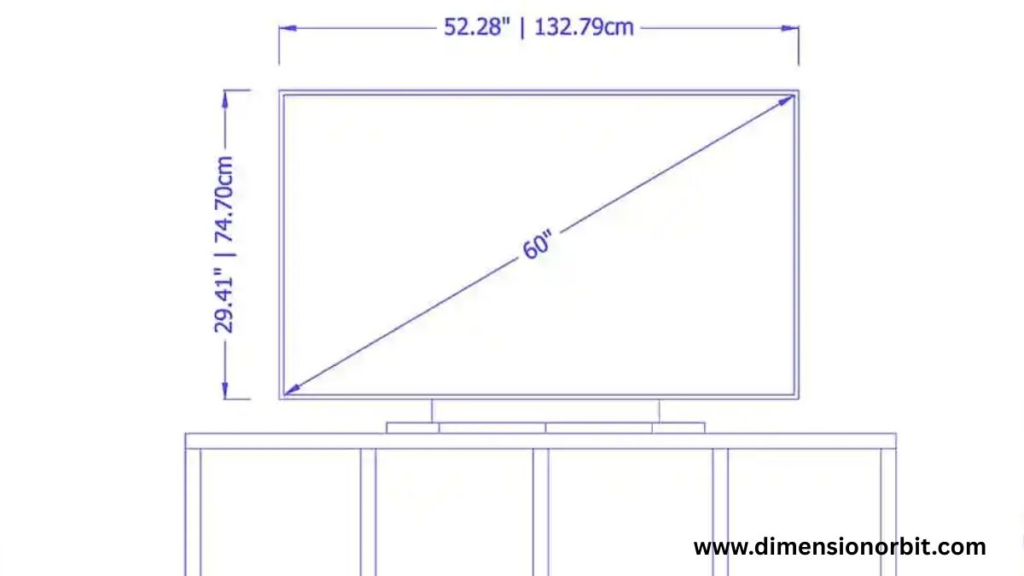
The 60 inch TV dimensions follow predictable math, but real models add small variations. The screen height for a 60 inch TV measures about 29.4 inches, or roughly 74.7 centimeters. Once bezels are included, total height increases to around 30 or 31 inches without the stand.
With the stand attached, total height usually falls between 32 and 34 inches, depending on stand design. This difference affects eye level viewing and furniture compatibility more than many people expect.
Depth also changes dramatically once the stand enters the picture. Without a stand, most 60 inch TVs remain extremely slim, measuring around 2 to 3 inches deep. With the stand attached, depth expands to anywhere from 10 to 14 inches, which can easily exceed the depth of older TV cabinets.
What a Wide 60 Inch TV Looks Like in Real Life
Numbers feel abstract until they meet furniture. A wide screen 60 inch TV stretches just over four feet across, which places it wider than most traditional TV consoles designed a decade ago.
Compared visually, a 60 inch TV feels noticeably wider than a 55 inch model. The difference becomes obvious the moment both sit on the same wall. At the same time, it does not dominate a room as aggressively as a 65 inch TV. This middle-ground width makes it appealing for people who want immersion without overwhelming the space.
In everyday terms, a 60 inch TV roughly matches the width of a three seat sofa. If that sofa already fills your wall, the TV will feel proportionate rather than excessive.
Why Actual Size Differs From Advertised Size

Buyers often wonder why two 60 inches TVs can have slightly different widths. The answer lies in design choices rather than measurement errors.
Bezel thickness plays the largest role. Some manufacturers favor nearly invisible borders, while others prioritize durability with thicker frames. Stand design also affects perceived width, especially with edge-mounted legs that extend beyond the screen.
Manufacturing tolerances create small variations as well. These differences rarely exceed an inch, yet that inch can determine whether a TV fits on existing furniture. Checking the official specification sheet before purchasing avoids surprises.
Understanding the Height of a 60 Inch TV
Height influences comfort more than screen size. A 60 inch TV without a stand stands roughly 30 inches tall, while the same TV with a stand attached rises closer to 33 inches.
This difference matters because the ideal viewing position places the center of the screen near eye level when seated. Mounting the TV too high strains the neck and reduces viewing comfort. Placing it too low forces constant downward gaze.
When mounted on a wall, the total height depends on bracket placement. When placed on furniture, the stand height becomes the controlling factor. Either way, height deserves as much attention as width.
Depth, Clearance, and Ventilation Needs
Depth rarely influences buying decisions, yet it often causes post-purchase regret. A 60 inch TV depth without a stand remains minimal. However, once the stand attaches, depth increases sharply.
Many cabinets designed for older TVs measure under 12 inches deep. A modern 60 inch TV with a stand can easily exceed that. Without enough depth, the TV sits too close to the edge, increasing the risk of tipping.
Ventilation clearance also matters. TVs generate heat, and restricting airflow shortens lifespan. Leaving at least an inch or two around the TV prevents heat buildup and protects internal components.
How Heavy Is a 60 Inches TV
Weight becomes critical when mounting or moving the TV. The average 60 inch TV weight without a stand falls between 45 and 55 pounds. With the stand attached, weight often increases to 50 to 65 pounds.
This weight range makes solo installation risky. Wall mounts must support more than the TV’s listed weight, not equal to it. Stands should exceed the TV’s weight rating to ensure stability.
Transporting a TV of this size also requires planning. The weight combined with width makes maneuvering through narrow spaces difficult without assistance.
Wall Mounting a Wide 60 Inches TV Safely
Wall mounting remains one of the most popular setups for a wide 60 inch TV. Most models support standard VESA mount sizes, commonly 400 by 400 millimeters.
The wall itself must provide enough horizontal space. While the TV’s screen measures around 52 inches wide, practical wall space should exceed 60 inches to allow breathing room on both sides. This spacing prevents the TV from looking cramped and allows easier cable management.
Stud placement determines mounting success. Drywall alone cannot support the weight safely. Securing the mount into wall studs ensures long-term stability.
Furniture and Stand Fit for a 60 Inch TV
Furniture mismatch remains the most common mistake buyers make. The minimum stand width for a 60 inch TV should exceed the TV’s total width. Ideally, the stand measures at least 55 inches wide, though 60 inches or more looks balanced.
Stand design changes everything. TVs with center stands require less width but more depth. TVs with edge-mounted legs demand wide furniture and cannot sit safely on narrow consoles.
Weight capacity also matters. A stand rated for 70 pounds offers more peace of mind than one rated for 50. Stability always beats aesthetics.
Room Size and Viewing Distance for a 60 Inch TV
A 60 inch TV works best when viewing distance falls within a comfortable range. Sitting too close makes the image overwhelming. Sitting too far reduces immersion.
The ideal viewing distance ranges from eight to ten feet, while the minimum comfortable distance sits around seven and a half feet. Beyond twelve feet, the screen begins to feel smaller than expected.
In smaller rooms, wall mounting helps maintain proper distance. In larger rooms, a 60 inches TV still performs well but may feel modest compared to 65 inches and larger options.
Transporting and Moving a 60 Inch TV
The TV itself might fit your wall, but its box might not fit your doorway. Packaging width often reaches 58 to 60 inches, with height approaching 38 inches.
Doorways, staircases, and elevators require diagonal clearance rather than straight width. Carrying the TV upright protects the panel from pressure damage. Laying it flat risks cracking the screen under its own weight.
Most screen damage occurs during transport, not daily use. Careful handling preserves the investment.
Is a 60 Inch TV Still a Practical Choice Today
Despite the popularity of 55 and 65 inch models, the 60 inches TV size remains relevant. It fills the gap for buyers who want a wider screen than a 55 without committing to the footprint of a 65.
Availability varies by brand, yet the size still makes sense for medium-sized living rooms, apartments, and wall-mounted setups. It delivers immersion without overpowering the space.
Choosing a 60 inches TV often comes down to room proportions rather than trends. When the measurements align, the experience feels balanced and intentional.
Wide 60 Inch TV Dimensions Table (Quick Reference)
| Measurement Type | Inches | Centimeters |
|---|---|---|
| Screen size (diagonal) | 60 in | 152.4 cm |
| Screen width (visible area) | 52.3 in | 133 cm |
| Screen height (visible area) | 29.4 in | 74.7 cm |
| Total width (with bezel) | 53–54 in | 134–137 cm |
| Total height (without stand) | 30–31 in | 76–79 cm |
| Total height (with stand) | 32–34 in | 81–86 cm |
| TV depth (without stand) | 2–3 in | 5–7 cm |
| TV depth (with stand) | 10–14 in | 25–36 cm |
| Average weight (without stand) | 45–55 lb | 20–25 kg |
| Average weight (with stand) | 50–65 lb | 23–30 kg |
| Minimum recommended stand width | 55 in | 140 cm |
| Ideal viewing distance | 8–10 ft | 2.4–3 m |
Digital tool
Digital tools like Feet and Inches Calculator can convert inches to centimeters or feet instantly. Many smartphone apps now offer augmented reality measuring features, allowing you to gauge objects virtually and compare them to known lengths.
Frequently Asked Questions
How wide is a 60 inch TV?
A 60 inch TV screen typically measures about 52.3 inches (133 cm) wide, while the full width including bezels ranges from 53 to 54 inches depending on the model.
What are the full dimensions of a 60 inch TV?
The screen height is around 29.4 inches (74.7 cm). With the stand, total height reaches 32–34 inches, and depth with the stand usually measures 10–14 inches. Weight ranges between 50–65 pounds (23–30 kg).
Does a 60 inch TV fit on a standard stand?
It depends on your furniture. The minimum stand width should be 55 inches, but ideally 60 inches or wider to safely accommodate the TV and its edge mounted legs.
How much space does a 60 inch TV need on a wall?
Allow at least 60 inches of horizontal wall space for proper fit and visual balance. Extra space is recommended for ventilation and cable management.
Can I wall mount a 60 inch TV?
Yes, most 60 inch TVs support VESA 400×400 mm mounts. Ensure the wall studs can support the TV’s 50–65 lb weight and allow at least a couple of inches of clearance for airflow.
How far should you sit from a 60 inch TV?
The ideal viewing distance ranges from 8–10 feet (2.4–3 m). Sitting closer than 7 feet may feel overwhelming, while sitting farther than 12 feet can make the screen feel small.
What is the depth of a 60 inch TV with and without the stand?
Without the stand, depth is usually 2–3 inches (5–7 cm). With the stand attached, it increases to 10–14 inches (25–36 cm), depending on the design.
Is a 60 inches TV too big for a small room?
A 60 inches TV can work in smaller rooms if wall-mounted and placed at the correct viewing distance. Furniture and wall width must also accommodate its size.
How heavy is a 60 inches TV?
Weight ranges from 45–55 pounds (20–25 kg) without the stand to 50–65 pounds (23–30 kg) with the stand. This matters for wall mounting and transportation.
What furniture fits a 60 inches TV?
A TV stand or cabinet wider than 55 inches, deep enough to support the stand, and capable of holding 50–65 pounds is ideal. Center stand designs require less width than edge-mounted legs.
What is the width of a wide 60 inches TV in inches including legs?
With edge mounted legs, the total width usually measures 53–54 inches, slightly wider than the visible screen alone. Always check the manufacturer’s spec sheet.
Final Thought
A wide 60 inch TV sits in a sweet spot that many people overlook. It delivers a noticeably larger viewing experience than a 55 inch model while avoiding the space demands and dominance of a 65 inch screen. The key is understanding what the number “60 inches” truly represents and planning around the actual width, height, depth, and weight, not the diagonal label on the box.
When you measure your wall, furniture, and viewing distance first, a 60 inches TV feels intentional rather than oversized. It fits naturally into medium sized rooms, mounts cleanly on walls, and provides immersive viewing without overwhelming the space. In the end, the right TV size isn’t about trends. It’s about proportions. Get those right, and a 60 inches TV becomes a perfect fit rather than a costly mistake.

Jhon AJS, the author of Dimension Orbit, is an experienced blogger fascinated by the mysteries of existence. He explores every type of dimension from scientific to spiritual with clarity and creativity. Jhon’s engaging writing style invites readers to think deeper, question reality, and discover new perspectives on the universe.