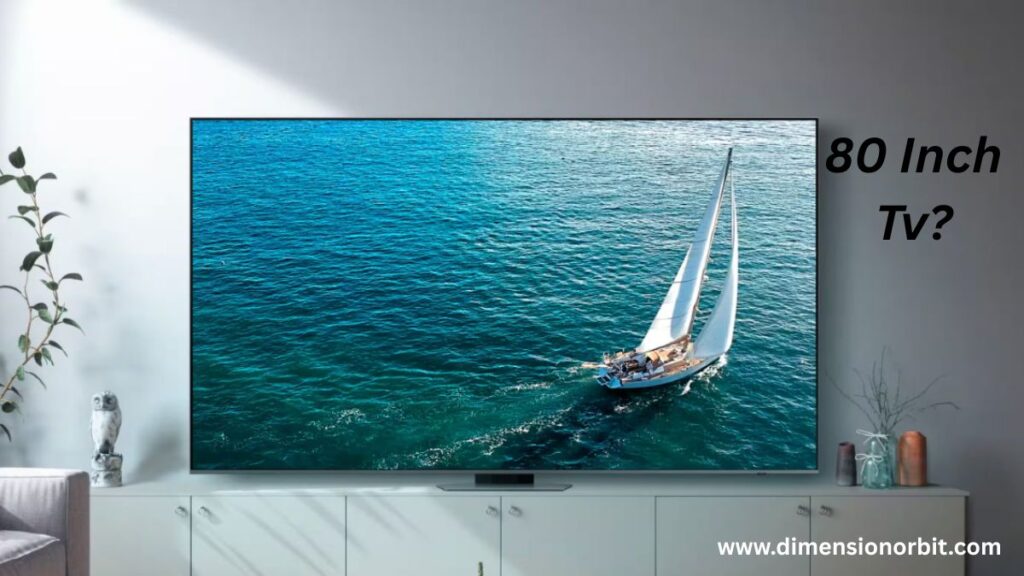
Ever tried explaining 80 inch TV dimensions to someone who thinks “bigger is always better”? That’s how living rooms end up looking like a front-row seat at a movie theater. An 80 inch TV sounds thrilling. Massive screen. Cinema vibes. Ego boost unlocked. But then reality hits. Will it fit on the wall? Can the stand handle it? Will you need binoculars or neck support? This guide cuts through the guesswork with real measurements, real space planning, and zero marketing fluff. If you’re wondering how big an 80 inch TV actually is, how much room it eats, and whether it’ll upgrade your space or dominate it, you’re in the right place.
What an 80 Inch TV Size Really Means
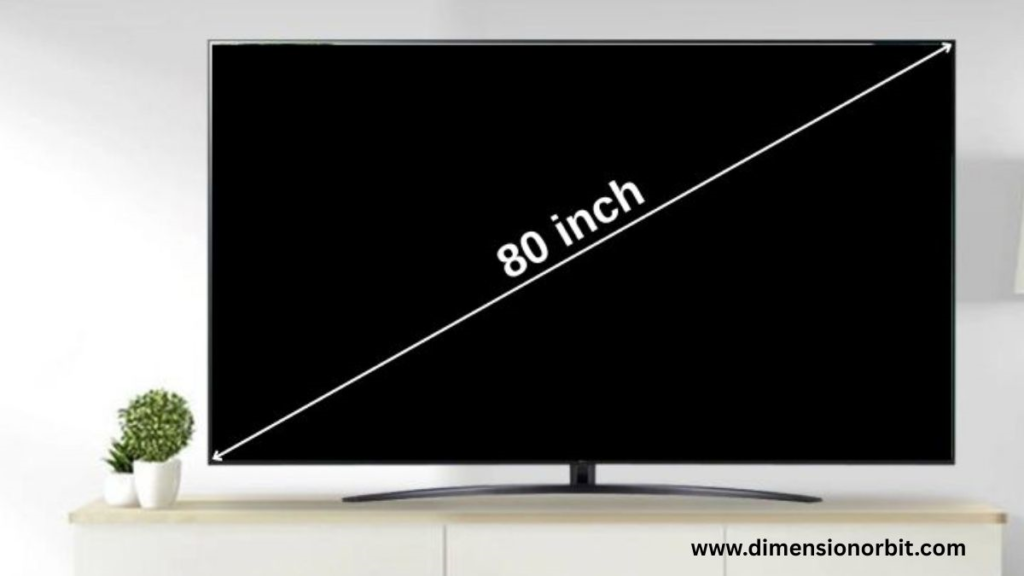
Let’s clear up the most common misunderstanding right away. The “80 inches” in an 80 inch TV does not describe the width or height of the screen. It describes the diagonal length of the visible display, measured from one corner to the opposite corner. This method, known as TV diagonal measurement, is the industry standard.
Almost every modern TV uses a 16:9 aspect ratio, which locks the relationship between width and height. Once you know that ratio, the real size becomes predictable. That diagonal number suddenly turns into something tangible instead of mysterious.
This is why two TVs with the same diagonal always look similar in shape, even if the bezels or stands differ.
80 Inch TV Dimensions in Plain Numbers

Using the 16:9 ratio, the 80 inch TV screen size measures roughly 69.7 inches wide and about 39.2 inches tall. That’s the visible display only. No frame. No bezel. Just the screen.
Once you add the bezel, which surrounds the display, the total size grows. Modern slim-bezel TVs usually end up between 71 and 73 inches wide and around 40 to 42 inches tall. This is the 80 inch TV actual size you must plan for when mounting on a wall or placing on furniture.
Depth is the third dimension most people forget. Without a stand, an 80 inch flat screen TV is surprisingly thin, usually around two to three inches. Add the stand, however, and depth jumps dramatically. Many models extend 14 to 18 inches from front to back once the stand is attached. That difference alone can decide whether your TV fits your space or not.
How Big an 80 Inch TV Feels in a Room
Numbers are helpful, but experience matters more. An 80 inch TV doesn’t just sit in a room. It dominates it. At nearly six feet wide, it becomes the visual anchor of the space whether you want it to or not.
In a large living room or open concept space, that presence feels intentional. The TV fills the wall naturally and creates a theater-like atmosphere. In smaller rooms, though, the same screen can feel overwhelming. Walls look shorter. Furniture feels crowded. Even sound behaves differently.
This is why people ask, how big is an 80 inch TV and will an 80 inch TV fit in my living room. The answer depends less on the TV and more on the room around it.
36 Inch TV Dimensions and Real Measurements
Width and Height in Real Use

An 80 inch TV width and height matter most when you’re planning placement. At roughly 72 inches wide with the bezel included, you need a wall or stand that’s wider than the TV itself. Ideally, you want a few inches of space on each side so the screen doesn’t feel squeezed in.
Height plays a bigger role in comfort than most people expect. With a total height around 41 inches, mounting the TV too high quickly becomes uncomfortable. Your neck notices immediately. For most seating positions, the center of the screen should sit close to eye level when seated. That usually places the TV center around 42 to 48 inches from the floor.
Ignore this, and even the best TV becomes tiring to watch.
Weight and Why It Matters More Than You Think

An 80 inch TV is heavy. Even with modern materials, most models weigh between 85 and 110 pounds without the stand. Add the stand, and you’re often looking at 95 to 125 pounds total.
This weight affects everything. Wall mounting requires a mount rated well above the TV’s weight, usually at least 150 pounds for safety. Stud placement becomes mandatory. Drywall anchors alone aren’t enough. Furniture must also support the load without flexing or bowing over time.
When people ask how heavy is an 80 inch TV, they’re really asking whether their wall, stand, and room can handle it. That’s a smart question.
Wide 48 Inch TV Size and Dimensions
How Much Space an 80 Inch TV Needs
Space planning is where most mistakes happen. Horizontally, the TV itself takes up to 73 inches. Add clearance on both sides, and you’re looking at roughly 80 inches of wall or furniture width for a comfortable setup.
Vertically, allowing breathing room above and below the screen improves both airflow and aesthetics. A total wall height clearance of about 50 inches works well in most rooms.
Depth depends on how you mount the TV. Wall mounted setups only need a few inches of clearance. Stand mounted setups require far more space, often pushing the TV close to the edge of shallow entertainment units. This is why 80 inch TV dimensions with stand deserve as much attention as the screen itself.
Viewing Distance and Visual Comfort
A screen this large demands distance. Sitting too close ruins the experience and exposes pixel structure, especially on lower-resolution content.
For a 4K screen, the ideal viewing distance falls between 8 and 10 feet. This range keeps the image immersive without overwhelming your field of vision. With 1080p, you’d need even more distance, which is why 4K resolution is effectively mandatory at this size.
If you’re wondering how far should you sit from an 80 inch TV, think of it this way: if your couch is closer than eight feet, the TV is probably too big for the room.
Is an 80 Inch TV Too Big? Sometimes, Yes
An 80 inch TV shines in large living rooms, home theaters, and open spaces where seating naturally sits farther back. In apartments, small living rooms, or rooms with shallow depth, it can feel like overkill.
Ceiling height also plays a role. Standard ceilings work fine, but low ceilings combined with a massive screen can make a room feel compressed. Balance matters more than raw size.
Asking is an 80 inch TV too big isn’t about fear. It’s about realism.
Wall Mounting an 80 Inch TV
Wall mounting is often the best option for this size, but it requires preparation. Most models use large VESA mount sizes, commonly 600×400 or 800×400 millimeters. The mount must support both the size and the weight of the TV, and it must be anchored into wall studs.
Mounting height becomes critical. Too high, and viewing becomes uncomfortable. Too low, and furniture blocks the screen. When done correctly, wall mounting frees floor space and makes the TV feel integrated rather than bulky.
This answers can you wall mount an 80 inch TV clearly: yes, but not casually.
TV Stand Requirements for an 80 Inch Screen
Not all TV stands are created equal. Many that look sturdy simply aren’t designed for a screen this large. For an 80 inch TV, the stand should be nearly as wide as the TV itself, ideally 75 to 80 inches. Depth should reach at least 18 inches to prevent tipping, and weight capacity should exceed 150 pounds to handle the load safely.
This is why people ask how wide should a TV stand be for an 80 inch TV. The answer isn’t flexible. Undersized furniture is a genuine safety risk.
80 Inch TV vs 75 Inch vs 85 Inch
Choosing between nearby sizes often comes down to room constraints and availability. A 75 inch TV fits more spaces comfortably and is easier to mount. An 85 inch TV delivers a true theater experience but demands even more space and distance.
The 80 inch size sits between them. It offers more immersion than 75 inches without the extreme requirements of 85. However, it’s also less common. Many manufacturers skip this size entirely, favoring standardized panel sizes.
This explains why some buyers struggle to find a true 80 inch model at all.
Resolution and Picture Quality at This Size
At 80 inches, resolution matters. Pixel density drops as screens grow, which makes flaws easier to see. A 4K panel maintains clarity at normal viewing distances and handles upscaling far better than older resolutions.
Choosing anything less than 4K at this size compromises the experience. Text looks softer. Fine details blur. The screen’s size amplifies every weakness.
Living With an 80 Inch TV Day to Day
Once installed correctly, an 80 inch TV transforms how you watch content. Sports feel closer. Movies feel cinematic. Even casual viewing becomes more immersive. But that immersion only feels good when the setup respects space, distance, and ergonomics.
When those elements align, the TV feels intentional rather than excessive.
80 Inch TV Dimensions Table (Real Measurements)
| Specification | Measurement (Approximate) | What This Means in Real Life |
|---|---|---|
| Screen Size (Diagonal) | 80 inches | Measured corner to corner, not width |
| Screen Width (Display Only) | 69.7 inches | Actual visible picture width |
| Screen Height (Display Only) | 39.2 inches | Actual visible picture height |
| TV Width (With Bezel) | 71 – 73 inches | Space the TV occupies on a wall or stand |
| TV Height (With Bezel) | 40 – 42 inches | Total vertical space required |
| Depth (Without Stand) | 2 – 3 inches | Thickness when wall mounted |
| Depth (With Stand) | 14 – 18 inches | How far it extends on a TV unit |
| Weight (Without Stand) | 85 – 110 pounds | Important for wall mounts |
| Weight (With Stand) | 95 – 125 pounds | Important for furniture safety |
| Recommended Viewing Distance (4K) | 8 – 10 feet | Comfortable, immersive viewing |
| Typical VESA Mount Size | 600×400 or 800×400 mm | Mount compatibility requirement |
| Minimum TV Stand Width | 75 – 80 inches | Prevents tipping and imbalance |
Digital tool
Digital tools like Feet and Inches Calculator can convert inches to centimeters or feet instantly. Many smartphone apps now offer augmented reality measuring features, allowing you to gauge objects virtually and compare them to known lengths.
FAQs
What are the exact 80 inch TV dimensions?
An 80 inch TV has a visible screen width of about 69.7 inches and a height of roughly 39.2 inches based on a standard 16:9 aspect ratio. With bezels included, the total width usually falls between 71 and 73 inches, and the height ranges from 40 to 42 inches, depending on the brand.
How wide is an 80 inch TV?
The actual picture area is nearly 70 inches wide, but once you include the frame, most 80 inch TVs require at least 72 inches of horizontal space. Always allow a few extra inches for ventilation and cable access.
How tall is an 80 inch TV?
The screen itself stands just over 39 inches tall, while the full TV height with bezels typically reaches 41 inches. This is important when placing the TV above cabinets, fireplaces, or low ceilings.
How much space does an 80 inch TV need?
You should plan for a wall or stand width of at least 75 inches. For comfortable viewing, a seating distance of 8 to 10 feet is recommended for 4K content, allowing the screen to feel immersive without overwhelming your vision.
How heavy is an 80 inch TV?
Most modern 80 inch TVs weigh between 85 and 110 pounds without the stand, and 95 to 125 pounds with the stand attached. This weight makes proper wall studs, mounts, and furniture load ratings critical.
Can you wall mount an 80 inch TV?
Yes, but only with a heavy duty wall mount rated well above the TV’s weight. Most 80 inch models use 600×400 mm or 800×400 mm VESA patterns, and mounting into wall studs is essential for safety.
How wide should a TV stand be for an 80 inch TV?
A TV stand should be at least 75 to 80 inches wide to provide stability and prevent tipping. Narrower stands increase the risk of imbalance, especially in homes with kids or pets.
Is an 80 inch TV too big for a living room?
An 80 inch TV works best in medium to large living rooms where seating is far enough back. In small rooms, it can feel overpowering and reduce viewing comfort, even with high resolution 4K panels.
What is the difference between a 75 inch and an 80 inch TV?
An 80 inch TV is about 4.5 inches wider and 2.5 inches taller than a 75 inch TV. While the size jump sounds small on paper, it becomes noticeable on the wall, especially in tighter spaces.
Is an 80 inch TV worth it?
If your room can handle the size, weight, and viewing distance, an 80 inch TV offers a theater-like experience that smaller screens cannot replicate. The key is matching the TV size to your space, not just buying the biggest screen available.
Final Thoughts
An 80 inch TV is not just a screen upgrade it is a commitment to space, planning, and proper setup. With a real world width close to 72 inches and a height around 41 inches, understanding true 80 inch TV dimensions matters far more than the diagonal number on the box. When sized correctly for your room, viewing distance, and wall or furniture strength, an 80 inch display delivers a cinematic experience that smaller TVs simply cannot match. Measure your space carefully, plan for weight and mounting requirements, and think long-term. Do that, and an 80 inch TV becomes a stunning centerpiece instead of an expensive mistake.

Jhon AJS, the author of Dimension Orbit, is an experienced blogger fascinated by the mysteries of existence. He explores every type of dimension from scientific to spiritual with clarity and creativity. Jhon’s engaging writing style invites readers to think deeper, question reality, and discover new perspectives on the universe.