So you’re standing in the store, staring at a box, wondering: how big is a 43 inches TV, really? On paper, it sounds modest. In real life, it can either fit your room like a tailored suit or dominate it like a refrigerator with WiFi. TV size math has a sneaky way of confusing smart people. Diagonals, bezels, stands, walls, couches it adds up fast. That’s why guessing never works. This guide cuts through the nonsense. You’ll see exact measurements, real world comparisons, and practical advice you can actually use. By the end, you’ll know whether a 43 inch TV belongs in your space or deserves a “no, thanks.”
What “43 Inches” Actually Means on a TV
Let’s clear up the most common misunderstanding first.
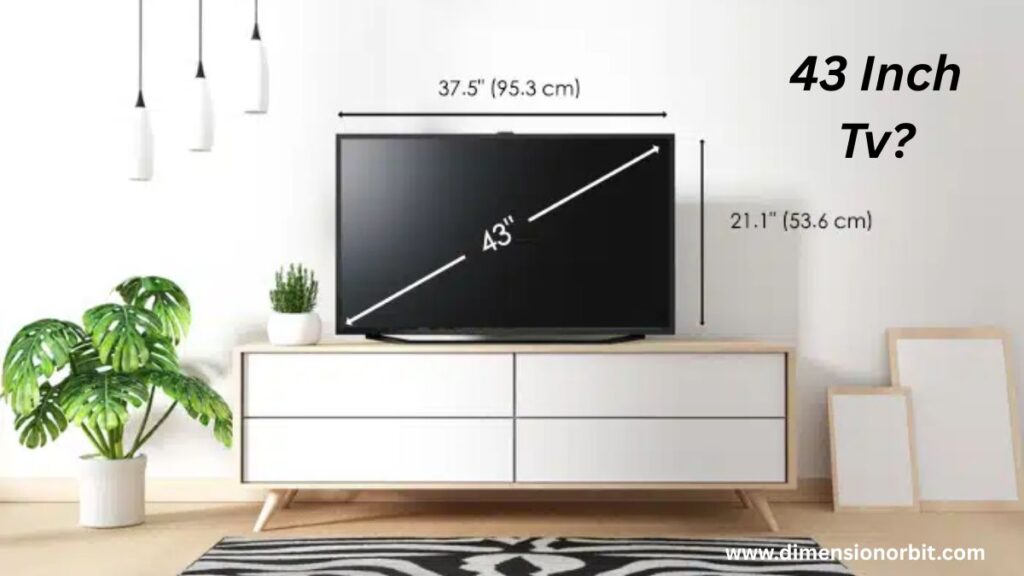
The 43 inches refers only to the diagonal measurement of the screen, taken from one corner to the opposite corner. It does not describe the width or height.
“TV size is measured diagonally because early screens varied in shape. Diagonal measurement became the industry standard.” Consumer electronics sizing standard
Almost every modern TV uses a 16:9 aspect ratio, which means the width and height follow a predictable formula. Once you know that, the real size becomes easy to calculate.
TV diagonal measurement explained
- Measured corner to corner
- Screen only, not the bezel
- Same method across all brands
- Doesn’t include the stand
That’s why two TVs labeled “43 inch” can still differ slightly in width and height. Bezels, frame design, and panel manufacturing all play a role.
37 Inch TV Width and Height Explained
Exact 43 Inch TV Dimensions Without the Stand
If you’re wall mounting or placing the TV inside a cabinet, these are the measurements that matter most.
For a standard 16:9 aspect ratio, a typical 43 inch TV dimensions without stand look like this:
| Measurement | Inches | Centimeters |
|---|---|---|
| Width | 37.5 – 38.0 in | 95.3 – 96.5 cm |
| Height | 21.1 – 21.5 in | 53.6 – 54.6 cm |
| Depth (panel only) | 2.0 – 2.5 in | 5.1 – 6.4 cm |
These numbers represent the screen and bezel combined, which is what you physically see.
Why sizes vary slightly
- Bezel thickness differs by brand
- Some TVs have metal frames, others plastic
- Premium models often shave millimeters
So when asking how wide is a 43 inch TV or how tall is a 43 inch TV, expect small variations. Always check the spec sheet before buying if space is tight.
Bezel Thickness and Why It Changes the Final Size

Bezels may look invisible in ads, but they still exist in real life.
A thin bezel can add 0.3–0.5 inches to the overall width. Thicker designs can add more.
Why bezel thickness matters
- Tight wall spaces
- Built in cabinets
- Side by side installations
- Flush wall mounting
Screen size vs actual dimensions is where many buyers misjudge fit. The screen may be 43 inches diagonally, but the body decides whether it fits your space.
43 Inch TV Dimensions With the Stand Attached
If you plan to place your TV on a console or table, the stand changes everything.
Here’s what 43 inch TV dimensions with stand usually look like:
| Measurement | Inches | Centimeters |
|---|---|---|
| Width | 38.0 – 39.0 in | 96.5 – 99.0 cm |
| Height | 23.5 – 24.5 in | 59.7 – 62.2 cm |
| Depth | 8.0 – 10.5 in | 20.3 – 26.7 cm |
Stand design matters more than you think
- Wide feet require long cabinets
- Center stands need depth, not width
- Decorative stands may increase height
If you’re asking will a 43 inch TV fit my TV stand, measure:
- Cabinet width
- Cabinet depth
- Clearance behind for cables
43 Inch TV Depth, Thickness, and Clearance Needs

Modern TVs are slim, but slim doesn’t mean zero space.
Typical 43 inch TV depth
- Panel thickness: 2–2.5 inches
- With cables connected: +1 inch
- Wall clearance needed: 1–2 inches
Why clearance matters
- Heat dissipation
- HDMI cable bend radius
- Power cord safety
TV airflow clearance keeps electronics cool and extends lifespan. Pressing a TV flat against the wall without space behind it is a bad idea.
How Heavy Is a 43 Inch TV?
Weight affects wall mounts, furniture strength, and even transport safety.
Here’s the average 43 inch TV weight:
| Configuration | Weight |
|---|---|
| Without stand | 16 – 20 lbs (7.3 – 9.1 kg) |
| With stand | 18 – 24 lbs (8.2 – 10.9 kg) |
Why weight matters
- Wall mount weight rating
- Drywall vs concrete walls
- Furniture load limits
A 43 inch TV is light compared to larger models, but never assume. Always match the mount rating to the TV weight plus a safety margin.
What a 43 Inch TV Looks Like in Real Life
Numbers help, but scale matters more.
A 43 inch TV roughly matches:
- The width of a standard two seat sofa
- About three kitchen cabinet doors wide
- Slightly wider than a twin mattress
Best room scenarios
- Bedrooms
- Small living rooms
- Apartments
- Dorms
- Office setups
This size feels immersive without overwhelming the space. That’s why 43 inch TV for bedroom searches are so common.
Recommended Viewing Distance for a 43 Inch TV
Viewing distance changes how big the TV feels.
Ideal distance
- 4K content: 3.5 – 5.5 feet
- HD content: 5.5 – 7 feet
Simple rule of thumb
Multiply the TV size by 1–1.5 for 4K viewing.
For a 43 inch screen:
- Minimum: 43 inches (3.6 ft)
- Comfortable: 60 inches (5 ft)
Sitting too far makes the TV feel small. Too close causes eye strain. Balance matters.
Will a 43 Inch TV Fit Your Space?
Before buying, measure three things. Not two. Three.
Measure your wall
- Available width
- Mount height
- Stud spacing
Measure your furniture
- Stand width clearance
- Stand depth
- Weight capacity
the TV box Measure
- Doorways
- Stairwells
- Vehicle cargo space
“Most returns happen because buyers measured the screen, not the space.” Retail logistics insight
Wall Mounting a 43 Inch TV Correctly
Yes, you can mount it. Most people do.
VESA mount size for 43 inch TV
- Common patterns: 200×200 mm
- Some models: 100×100 mm
Recommended mounting height
- Center of screen at eye level when seated
- Usually 40–44 inches from the floor
Mount types
- Fixed
- Tilting
- Full-motion
Check the TV mount weight rating and wall type before drilling.
Transporting and Moving a 43 Inch TV Safely
If you’re picking it up yourself, size matters.
43 inch TV box dimensions (average)
- Width: 42–45 inches
- Height: 26–28 inches
- Depth: 6–8 inches
Can a 43 inch TV fit in a car?
- Fits in most sedans with seats folded
- Easily fits in SUVs and hatchbacks
Moving tips
- Keep it upright
- Never lay flat
- Use original packaging
Transport damage usually happens when TVs lie flat.
Common Mistakes People Make With 43 Inch TVs
These mistakes cost time, money, or comfort.
Avoid these
- Assuming diagonal equals width
- Ignoring stand depth
- Mounting too high
- Forgetting cable clearance
- Choosing size before measuring room
A few minutes with a tape measure beats a return trip.
43-Inch TV Size Overview (Quick Reference)
| Spec | Measurement |
|---|---|
| Screen size | 43 inches (diagonal) |
| Width | 37.5–38 in |
| Height | 21.1–21.5 in |
| Depth | 2–2.5 in |
| Weight | 16–24 lbs |
| Viewing distance | 3.5–7 ft |
| Best rooms | Bedroom, apartment, office |
Is a 43 Inch TV Too Big or Too Small?
It depends on the room.
A 43 inch TV is ideal if:
- Your room is under 200 sq ft
- Seating is 4–6 feet away
- You want balance, not dominance
Consider larger if:
- Seating is over 7 feet away
- It’s a large living room
- You want cinematic immersion
That’s why 43 inch TV vs 50 inch comparisons matter. Size should match distance, not desire.
Digital tool
Digital tools like Feet and Inches Calculator can convert inches to centimeters or feet instantly. Many smartphone apps now offer augmented reality measuring features, allowing you to gauge objects virtually and compare them to known lengths.
FAQs
How wide is a 43 inch TV?
A typical 43 inch TV has a width of 37.5–38 inches (95–96.5 cm) without the stand. With the stand, the width can increase slightly to 38–39 inches (96.5–99 cm) depending on the design.
How tall is a 43 inch TV?
Without the stand, the height is usually 21.1–21.5 inches (53.5–54.5 cm). With the stand attached, it can range between 23.5–24.5 inches (59.7–62.2 cm).
What is the depth of a 43 inch TV?
The panel thickness is typically 2–2.5 inches (5–6.4 cm). With the stand and cables, the total depth can reach 8–10.5 inches (20–26.5 cm).
How heavy is a 43 inch TV?
A 43 inch TV usually weighs 16–20 lbs (7.3–9.1 kg) without the stand and 18–24 lbs (8.2–10.9 kg) with the stand.
Will a 43 inch TV fit on my TV stand?
Check your stand width and depth. Most 43 inch TVs fit comfortably on cabinets 38–40 inches wide and 10 inches deep, but always measure first.
Can I wall mount a 43 inch TV?
Yes. Most 43 inch TVs use a VESA 200×200 mm mount. Ensure your wall and mount can handle the weight and leave 1–2 inches of clearance behind for cables and airflow.
What is the recommended viewing distance for a 43 inch TV?
For 4K content, sit 3.5–5.5 feet away. For HD, 5.5–7 feet provides optimal viewing without straining your eyes.
Is a 43 inch TV too small for a living room?
It depends on room size and seating distance. For small to medium living rooms or apartments, a 43 inch TV is ideal. For larger spaces or seating over 7 feet away, consider 50 inches or larger.
Can a 43 inch TV fit in a car?
Yes. Most sedans, SUVs, and hatchbacks can transport a 43 inch TV if the back seats are folded and the TV is kept upright in its box.
Should I buy a 43 inch TV for a bedroom?
Absolutely. Its size is perfect for bedrooms or apartments, providing immersive viewing without dominating the space.
Final Thought
A 43 inches TV is the perfect balance between size, comfort, and versatility. It’s big enough to make movies and shows feel immersive but compact enough to fit bedrooms, apartments, and smaller living rooms without overwhelming the space. By understanding the 43 inches TV dimensions, including width, height, depth, and stand requirements, you can avoid awkward surprises during setup or mounting. Measure your room, plan viewing distance, and account for furniture and wall space. When done right, a 43 inches TV delivers entertainment that feels just right clear, immersive, and hassle free making it a smart choice for most homes.

Jhon AJS, the author of Dimension Orbit, is an experienced blogger fascinated by the mysteries of existence. He explores every type of dimension from scientific to spiritual with clarity and creativity. Jhon’s engaging writing style invites readers to think deeper, question reality, and discover new perspectives on the universe.