Buying a new TV always sounds simple until you start asking the real question: How big is a 50 inch TV in actual width and height? The number printed on the box only tells you the diagonal measurement, and most people don’t realize how different the real physical footprint can be. When you understand the exact 50 inch TV dimensions, you can figure out whether it fits on your stand, mounts properly on your wall, or matches the size of your room. A 50 inch TV sits right in the mid size category, making it one of the most popular choices for modern homes, especially for bedrooms and medium living rooms. Yet many buyers still get confused about the real measurements, the seating distance, and whether the TV will look too small or too large once it’s installed.
A 50 inch display uses a 16:9 aspect ratio, which is the standard for most TV screens today. This ratio helps determine the actual width and height, which matter more than the diagonal number if you’re trying to plan the perfect space. Once those numbers are clear, everything becomes easier. You can finally visualize the TV on your wall or cabinet without guessing. The goal of this guide is to give you a complete, accurate, and real world understanding of the true size of a 50 inch TV, with detailed tables, clear explanations, and helpful diagrams so you can choose confidently.
Quick Snapshot of 50 Inch TV Dimensions
For anyone in a hurry, here are the standard physical 50 inch TV measurements used by most major brands. These are the actual, figures you can rely on when checking your space at home.
| Specification | Inches | Centimeters |
|---|---|---|
| Diagonal Screen Size | 50″ | 127 cm |
| Typical Width (without stand) | 44″ | 111.8 cm |
| Typical Height (without stand) | 24.8″ | 63 cm |
| Average Panel Depth | 2″–3.5″ | 5–9 cm |
| Height on Stand | 27″–29″ | 68.5–73.6 cm |
| Stand Depth Footprint | 9″–12″ | 22.8–30.5 cm |
These measurements come from the latest Samsung, LG, Sony, TCL, and Hisense models. Slight variations happen because of frame thickness and stand design, but these averages are extremely reliable for planning.
Pressure Measurement A Practical Guide
How Manufacturers Measure a 50 Inch TV
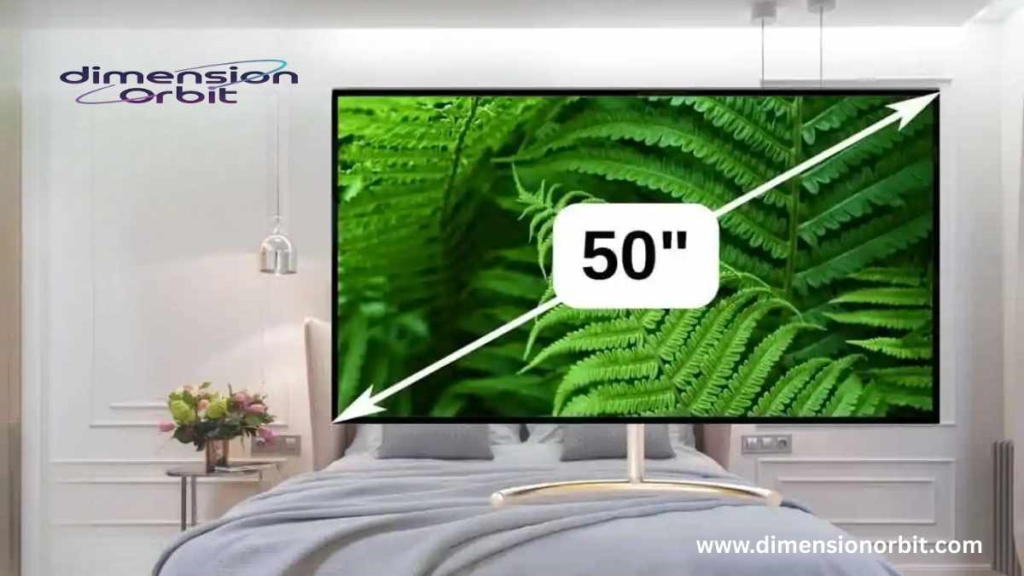
TV makers always measure screen size diagonally because it gives a larger number, which looks more attractive to buyers. That diagonal length begins at one corner of the display and stretches to the opposite corner. It does not represent the width or the height, which throws off a lot of people during setup. A 50 inch TV doesn’t have a 50 inch width; it is noticeably smaller horizontally.
Since most screens follow the 16:9 aspect ratio, meaning sixteen units in width for every nine units in height, this proportion determines the real physical shape of the TV. The diagonal never changes, but the width and height do. That’s the secret behind the actual 50 inch TV width and height.
The Real Width and Height of a 50 Inch Screen

To understand the true size of a 50 inch TV, it helps to walk through a quick explanation of the math behind the dimensions. Even if math isn’t your favorite subject, this is surprisingly simple and very useful.
The diagonal represents one side of a triangle formed by the screen’s width and height. With a 16:9 ratio, the width is sixteen units and the height is nine units. When you square both numbers, add them together, and take the square root, you get a scaling factor used to calculate the actual size. In this case, the diagonal number of fifty inches divided by this factor gives approximately 2.72 inches per unit. Multiply that unit by sixteen, and the width becomes roughly 43.6 inches. Multiply it by nine, and the height becomes around 24.5 inches.
These are pure display dimensions, without the frame. Once you include bezels, the width rises to about 44 to 44.5 inches, and the height reaches 24.8 to 25.5 inches. This makes the size consistent across most models on the market today.
| Measurement | Inches | Centimeters | Notes |
|---|---|---|---|
| Screen Width | 43.6″ | 110.7 cm | Pure panel area |
| Screen Height | 24.5″ | 62.2 cm | Pure panel area |
| Outer Width | 44″–44.5″ | 111.8–113 cm | Depends on bezel |
| Outer Height | 24.8″–25.5″ | 63–64.7 cm | Slight frame variation |
| Panel Depth | 2″–3.5″ | 5–9 cm | Slim OLED vs LED |
| Depth With Stand | 9″–12″ | 22.8–30.5 cm | Depends on stand design |
These numbers finally answer the question: How big is a 50 inch TV in real life?
Visual Diagram of a 50 Inch TV
A simple diagram can make the dimensions even clearer.
        ┌────────────────────────────────────────┐
        │                 50" SCREEN              │
        │             (16:9 Aspect Ratio)         │
        └────────────────────────────────────────┘
                     Approx. 44" Width

                   Approx. 24.8" Height
This is the shape you’ll see on your wall or stand. Once you picture it this way, planning your space becomes easy.
Energy measurement A Practical Guide
Frame Thickness, Panel Depth, and Stand Footprint

Modern TVs look cleaner and more elegant because manufacturers now use extremely slim frames and thinner panels. Many new models have bezels as thin as 0.1 inches, while older models may stretch closer to half an inch. This might seem small, but it creates noticeable differences when calculating outer width and height.
Panel depth also matters. OLED screens are usually the slimmest, often under two inches. Standard LED TVs can be slightly thicker, especially if they use direct lit panel technology. When the TV sits on a stand, the depth increases significantly because stands vary in size. Some use a central pedestal, while others use two wide legs at the edges. If your TV has feet near the ends, you’ll need a wide table to support it properly.
Most people make the mistake of assuming that if the TV width is forty four inches, any forty four inch stand works. In reality, the feet of the TV may be spaced wider than the overall width of the cabinet they plan to use. Always check the stand footprint before purchase.
the Best Viewing Distance for a 50 Inch TV
Comfortable viewing depends on how far you sit from the screen. The ideal 50 inch TV viewing distance changes depending on the resolution. Industry standards like SMPTE and THX offer guidelines to achieve the perfect viewing angle and clarity.
SMPTE recommends sitting at a distance that allows a thirty-degree viewing angle. For a fifty inch screen, this is roughly 6.6 feet. THX offers a more immersive approach by recommending a position closer to 4.9 feet. When the TV uses 4K resolution, you can sit even closer without noticing pixel structure, making the experience more detailed and richer.
Here is a table showing the best seating positions based on resolution:
| Resolution | Ideal Distance | Max Recommended |
|---|---|---|
| 1080p | 6.5–8 ft | 10 ft |
| 4K | 4.5–7 ft | 9 ft |
| 8K | 3–5 ft | 7 ft |
Gamers often prefer sitting slightly closer because it increases their field of vision, creating a more immersive and responsive gaming experience.
Power Measurement A Complete Guide
Will a 50 Inch TV Fit in My Room? A Practical Fit Guide
A 50 inch TV works remarkably well in a variety of spaces. In a small bedroom around ten by ten feet, it becomes a central viewing screen without overwhelming the room. Mounting it higher on the wall opens up floor space and creates a comfortable viewing angle from the bed.
Medium sized bedrooms around ten by twelve feet offer an even better match. The proportions feel natural, and the TV fits nicely on top of a dresser or a medium width TV stand. In a twelve by fifteen foot living room, a fifty inch screen feels moderately sized and works great for everyday entertainment, sports, movies, and family gatherings.
In very large rooms above fifteen by fifteen feet, some viewers prefer stepping up to fifty five or even sixty five inches because the extra wall width makes a mid size TV look smaller than expected. Still, the suitability depends on your taste, seating distance, and how you plan to decorate the room.
Wall Space and Clearance Requirements
Mounting a 50 inch TV on a wall requires a little more than just the width and height. The thickness of the mount and the clearance needed for cables matter as well. Slim mounts sit about one inch from the wall, while full motion mounts may extend several inches.
This simple diagram shows how much space you need:
         Wall
   ┌──────────────────────┐
   │        TV Panel      │ (2"–3.5" Depth)
   └──────────────────────┘
          ↑ 2"–4" for cables
Ignoring this space leads to bent cables and restricted airflow, which is never good for the longevity of the television.
Is a 50 Inch TV the Right Size for You?
Choosing the perfect size isn’t only about numbers. It’s about how the TV feels in your space and how you plan to use it. A fifty inch screen creates a balanced experience in most living rooms. It delivers rich visuals without dominating the wall. It’s also excellent for watching movies, sports, and streaming shows. Many users find it to be the ideal compromise between immersion and practicality.
In a bedroom, a 50 inch TV remains comfortable because you usually watch it from a relaxed distance. It doesn’t overpower the room, and when mounted at the right height, it feels natural and easy on the eyes.
Gamers, especially those who sit slightly closer to the screen, appreciate the size because it offers a wide field of view without forcing them to move their head excessively. When paired with a 4K console or PC, the details look crisp and engaging.
Comparing the 50 Inch TV to Other Popular Sizes
To help you decide whether a 50 inch screen is ideal or if you should consider going bigger or smaller, the following comparison table shows the dimensions of other common TV sizes.
| TV Size | Width | Height | Best For |
|---|---|---|---|
| 43″ | 38″ | 21.5″ | Small rooms and offices |
| 50″ | 44″ | 24.8″ | Bedrooms and mid-size living rooms |
| 55″ | 48″ | 27″ | Most modern homes |
| 65″ | 57″ | 32″ | Large living rooms |
A fifty inch TV sits comfortably in the center of the TV size chart, making it one of the most balanced choices for all types of viewers.
Avoiding Common Mistakes When Choosing a 50 Inch TV
Many buyers underestimate the space required for the stand or forget to leave enough room behind the TV for cable clearance. Others assume the diagonal number equals horizontal width, leading to expensive returns or awkward setups. Some mount the TV too high, which results in neck strain and poor viewing angles. These are small mistakes but easy to avoid when you understand the real fifty inch TV measurements.
A TV also needs airflow to stay cool. Keeping it too close to a wall without clearance may reduce its lifespan. Even slim TVs with modern ventilation benefit from at least two to four inches of breathing room behind the panel.
Digital tool
Digital tools like Feet and Inches Calculator can convert inches to centimeters or feet instantly. Many smartphone apps now offer augmented reality measuring features, allowing you to gauge objects virtually and compare them to known lengths.
FAQs
What are the actual dimensions of a 50 inch TV?
Most 50 inch TVs measure around 44 inches in width and about 24.8 inches in height, depending on bezel thickness.
How far should I sit from a 50 inch TV?
For 4K quality, sitting between 4.5 and 7 feet creates the best viewing experience. For 1080p screens, 6.5 to 8 feet works better.
Will a 50 inch TV fit on a standard TV stand?
Yes, as long as the stand is at least 44 inches wide and deep enough to support the TV’s stand footprint.
Is a 50 inch TV too big for a bedroom?
Most bedrooms handle a 50 inch TV perfectly, especially when viewers watch from 6 to 10 feet away.
Does a 50 inch TV look small in a living room?
In medium rooms, a 50 inch TV looks balanced. In larger living rooms, some viewers prefer stepping up to a 55 or 65 inch screen.
Does frame size affect the width of a 50 inch TV?
Yes, slim bezels reduce overall size, while thicker frames add up to an inch to both the width and height.
Is 50 inches a good size for gaming?
Absolutely. The screen feels immersive, and when paired with 4K consoles, it delivers sharp visuals without overwhelming the space.
Can I wall mount a 50 inch TV easily?
Most 50 inch TVs support VESA mounting and fit well with both slim and full motion mounts, as long as you leave clearance for cables.
How much does a 50 inch TV weigh?
Most modern 50 inch TVs weigh between 20 and 30 pounds, depending on panel type and design.
Is a 50 inch TV worth buying in 2025?
Yes. It’s a sweet spot size that balances immersion, room fit, price, and picture quality making it one of the most popular TV choices.
Conclusion:
Now that you’ve seen the real numbers, the diagrams, and the viewing recommendations, the size of a 50 inch TV becomes far easier to visualize. With an outer width of about forty four inches and a height under twenty five inches, it fits beautifully into bedrooms, offices, and mid size living rooms. Its proportions strike the right balance between immersion and practicality. When mounted at an appropriate height and viewed from the recommended distance, a fifty inch screen can transform the way you watch movies, play games, or enjoy everyday entertainment.
If you’re searching for the ideal middle ground screen that is neither too small nor too overwhelming, the 50 inch TV sits exactly where it should: perfectly balanced, spacious, modern, and ready to fit almost anywhere you need it.

Jhon AJS, the author of Dimension Orbit, is an experienced blogger fascinated by the mysteries of existence. He explores every type of dimension from scientific to spiritual with clarity and creativity. Jhon’s engaging writing style invites readers to think deeper, question reality, and discover new perspectives on the universe.