
Buying a new TV sounds easy until one innocent question derails your confidence: how big is a 65 inches TV really? On the website, it looks perfect. In your imagination, it looks cinematic. Then reality hits. Will it swallow your wall? Block the window? Scare the cat? Suddenly, you’re pacing the room with a tape measure, eyeballing furniture like a detective at a crime scene. A 65 inch TV isn’t just a screen. It’s a commitment. Get it right, and movie night feels magical. Get it wrong, and your living room feels… crowded. Let’s clear the confusion before the box shows up.
What the “65 Inch” Measurement Actually Refers To
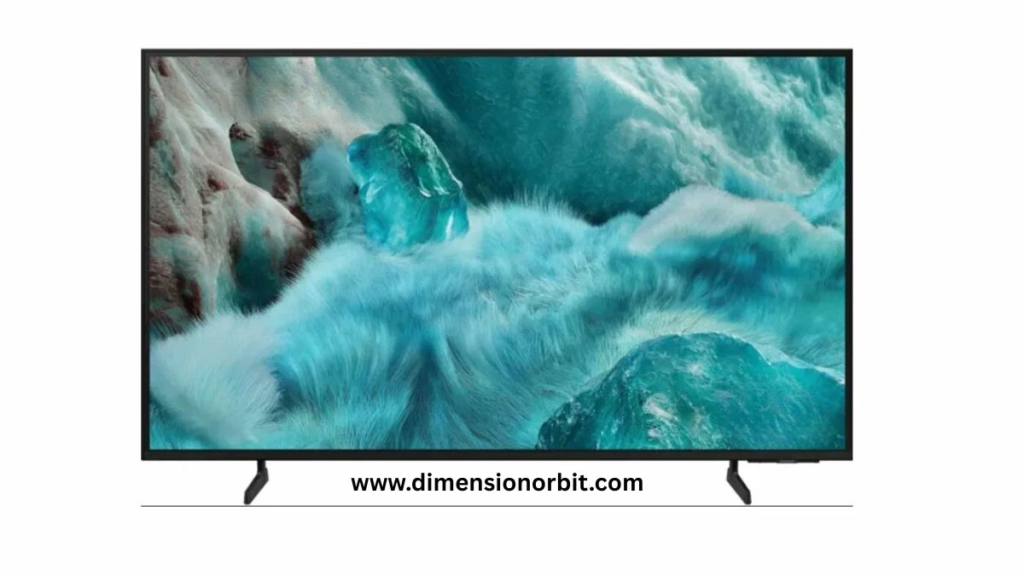
The term 65 inch TV size refers only to the diagonal length of the screen, measured from one corner to the opposite corner. This measurement does not describe the width or the height. That misunderstanding causes most sizing mistakes.
Manufacturers measure televisions using the tv screen diagonal measurement, and almost all modern models follow a 16:9 aspect ratio TV. Because the aspect ratio is standardized, the dimensions of a 65 inch TV stay relatively consistent across brands, with only minor variations caused by bezel thickness and design choices.
A helpful way to think about it is this: the diagonal tells you how immersive the picture will feel, but the width and height determine whether the TV actually fits in your space.
Exact 65 Inch TV Dimensions Without the Stand
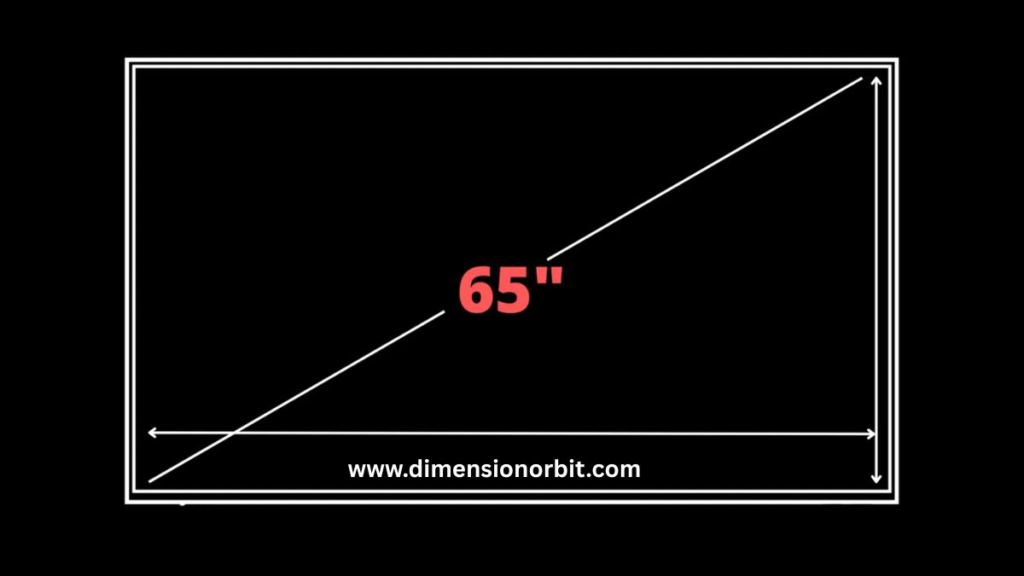
When people ask for 65 inch TV measurements, they usually want to know the real width and height. For a standard 16:9 display, the actual size of a 65 inch TV screen is very predictable.
A typical 65 inch television measures about 56.7 inches wide and 31.9 inches tall. In metric terms, that translates to roughly 144 centimeters wide and 81 centimeters high. These figures represent the screen itself and do not include the stand or feet.
These numbers answer several common questions at once, including how wide is a 65 inch TV, 65 inch TV width and height, and dimensions of a 65 inch TV in inches and centimeters. While small differences exist between models, they are usually less than half an inch and rarely affect real world placement.
Why TV Bezels Slightly Change the Size

Although most manufacturers advertise bezel less designs, every TV still has a frame. The tv bezel size can slightly increase the overall width and height of the television compared to the visible screen area.
Premium OLED models often have thinner bezels, while budget LED TVs may have thicker borders. This difference doesn’t change the diagonal measurement, but it can matter when fitting a TV into a tight wall niche or between cabinets.
For practical planning, always use the manufacturer’s listed “TV dimensions without stand” rather than relying on the diagonal size alone.
46 Inch TV Actual Size & Setup
65 Inch TV Dimensions With the Stand Attached

Once the stand enters the picture, the size changes in ways that surprise many buyers. The height increases, and the depth becomes far more important.
Most 65 inch TVs measure between 34 and 36 inches tall with the stand attached, depending on the design. The stand typically adds two to four inches of height. Depth increases more dramatically, often reaching 10 to 14 inches, especially on models with wide-set feet.
This explains why people search for 65 inch TV dimensions with stand and how tall is a 65 inch TV with stand. The answer depends on the stand style. Center pedestal stands are compact and work well on narrower furniture. Wide set legs require a broader surface and can extend close to the edges of your console.
Television Depth, Thickness, and Wall Clearance

Modern TVs look thin, but they still need space to breathe. Understanding television depth and thickness helps avoid installation mistakes.
Most LED TVs are around two to three inches thick at their widest point. OLED models are even slimmer, often under two inches. However, wall mounting adds depth. Even low profile mounts push the screen one to two inches away from the wall.
Proper wall mount TV clearance is essential. Cables need room to bend without strain, and ventilation prevents overheating. In practice, a wall mounted 65 inch TV usually sits three to five inches from the wall once everything is connected.
Ignoring this detail can lead to damaged ports, overheating, or an awkward installation that’s difficult to fix later.
What a 65 Inch TV Looks Like in Real Life

Numbers are useful, but visualizing scale makes everything click. A 65 inch flat screen TV size feels large because it is large, yet it fits comfortably in most modern living rooms.
In real-world terms, a 65 inch TV is wider than a standard loveseat and roughly as wide as a twin mattress. It dominates the wall visually without crossing into “home theater only” territory. This balance explains why it’s become one of the most popular sizes on the market.
When compared directly, the jump from 55 inches to 65 inches feels substantial. The jump from 65 inches to 75 inches feels dramatic. That’s why the tv size comparison 55 vs 65 vs 75 often leads people to settle on 65 inches as the sweet spot.
Recommended Viewing Distance for a 65 Inch TV
Size alone doesn’t determine comfort. Distance matters just as much. The recommended viewing distance for a 65 inch TV depends largely on resolution.
For a 4K television, the ideal distance is between 7 and 9 feet. This range allows you to see fine detail without noticing individual pixels. For older 1080p content, sitting slightly farther back, around 9 to 11 feet, feels more comfortable.
These distances answer common questions like how far should you sit from a 65 inch TV and best viewing distance for 65 inch 4K TV. Sitting too far away reduces immersion, while sitting too close can cause eye fatigue during long viewing sessions.
Will a 65 Inch TV Fit in Your Room?
This is where measurements become practical. To determine how much space a 65 inch TV needs, start with wall width.
The screen itself measures just under 57 inches wide. For proper balance and airflow, adding a few inches of clearance on each side is smart. That means a minimum wall width of about 62 to 65 inches works best.
Room depth matters too. To maintain the ideal viewing distance, the room should allow seating at least seven feet from the screen. Most standard living rooms meet this requirement easily, which is why a 65 inch TV is often recommended as the best size for shared spaces.
This directly addresses searches like will a 65 inch TV fit, minimum wall width for 65 inch TV, and best room size for a 65 inch TV.
Wall Mounting a 65 Inch TV Correctly
Wall mounting transforms how a TV feels in a room. Done right, it looks clean and intentional. Done wrong, it causes neck strain.
The ideal 65 inch TV height from floor when wall mounted places the center of the screen at about 40 to 42 inches above the floor. This aligns the picture with your natural eye level when seated.
Mounting too high is the most common mistake. TVs placed above fireplaces often look impressive but feel uncomfortable over time. Following a proper tv mounting height guide prevents that problem and makes long viewing sessions enjoyable.
Does a 65 Inch TV Fit on a 60 Inch Stand?
Technically, yes. Practically, it’s not ideal.
A 65 inch TV is roughly 56.7 inches wide. Placing it on a 60 inch stand leaves less than two inches of space on each side. While this setup works in a pinch, it offers little margin for error and can look cramped.
For better balance and stability, a stand between 65 and 70 inches wide works far better. This solves concerns about tv stand width requirements and answers the question does a 65 inch TV fit on a 60 inch stand honestly.
Is a 65 Inch TV Too Big?
This question comes up constantly, and the answer depends on context rather than taste.
A 65 inch TV is not too big for most living rooms. It fits well in spaces where seating is seven feet or more from the screen. It excels for movies, sports, and gaming, where immersion matters.
In bedrooms, the answer changes. If the room is small and the bed sits close to the screen, 65 inches can feel overwhelming. That’s why people ask is a 65 inch TV too big for bedroom. In many cases, a 55 inch model feels more comfortable there.
For apartments, especially open-plan layouts, a 65 inch TV often works perfectly as long as viewing distance and wall space are adequate. This makes it a strong option for a tv size for apartment living room.
How Heavy Is a 65 Inch TV?
Weight matters, especially for wall mounting.
Most modern 65 inch TVs weigh between 45 and 60 pounds without the stand. OLED models tend to sit at the higher end of that range. Adding the stand usually increases weight by another five to ten pounds.
This information answers how heavy is a 65 inch TV and helps ensure you choose a mount rated well above the TV’s actual weight.
Real-World Tools to Visualize a 65 Inch TV
Guesswork leads to regret. Visualization tools remove uncertainty.
Several manufacturers and review sites offer size comparison and augmented reality tools that let you see how a 65 inch TV fits in your space. RTINGS provides a reliable size comparison tool, while brands like Samsung and LG offer AR placement features through their mobile apps.
Using these tools helps confirm whether a 65 inch TV will fit before it ever enters your home.
Common Mistakes People Make When Choosing a 65 Inch TV
Most mistakes come down to focusing on the diagonal number alone. People forget to measure wall width, ignore stand depth, or mount the TV too high. Others sit too far away, which defeats the purpose of buying a larger screen in the first place.
Avoiding these errors ensures the actual size of a 65 inch TV feels impressive rather than awkward.
65 Inch TV Size, Dimensions, and Setup Overview
| Specification | Measurement | What It Means in Real Life |
|---|---|---|
| Screen Size (Diagonal) | 65 inches | Measured corner to corner, not width or height |
| Width (Without Stand) | 56.7 inches | Determines wall space and stand compatibility |
| Height (Without Stand) | 31.9 inches | Useful for wall mounting and vertical clearance |
| Height (With Stand) | 34–36 inches | Stand adds extra height depending on design |
| Depth (With Stand) | 10–14 inches | Important for shallow TV stands |
| Depth (Wall Mounted) | 3–5 inches | Includes wall mount and cable clearance |
| Minimum Wall Width | 62–65 inches | Allows airflow and visual balance |
| Recommended Viewing Distance (4K) | 7–9 feet | Best clarity and immersion for modern content |
| Recommended Viewing Distance (1080p) | 9–11 feet | Prevents visible pixel structure |
| Ideal Stand Width | 65–70 inches | Provides stability and better aesthetics |
| Average Weight | 45–60 lbs | Affects wall mount and stand rating |
| Best Room Type | Living room | Ideal balance of size and immersion |
Digital tool
Digital tools like Feet and Inches Calculator can convert inches to centimeters or feet instantly. Many smartphone apps now offer augmented reality measuring features, allowing you to gauge objects virtually and compare them to known lengths.
FAQs
How wide is a 65 inch TV exactly?
A 65 inch TV is about 56.7 inches wide without the stand. The exact width can vary slightly depending on bezel size and brand, but most models stay within a half inch of this measurement.
What are the dimensions of a 65 inch TV?
The standard 65 inch TV dimensions are approximately 56.7 inches wide and 31.9 inches tall without the stand. With the stand attached, the height usually increases to around 34–36 inches.
How much space does a 65 inch TV need?
A 65 inch TV needs at least 62–65 inches of wall width to allow for side clearance and airflow. For comfortable viewing, you should also have 7–9 feet of distance between the TV and your seating area.
Is a 65 inch TV too big for a living room?
For most living rooms, a 65 inch TV is not too big. It’s considered an ideal size for medium to large spaces, especially when seating is placed seven feet or more from the screen.
Does a 65 inch TV fit on a 60 inch stand?
A 65 inch TV can fit on a 60 inch stand, but it’s a tight fit. For better balance and stability, a stand that is 65 inches or wider is strongly recommended.
How far should you sit from a 65 inch TV?
The recommended viewing distance for a 65 inch TV is 7–9 feet for 4K content and 9–11 feet for 1080p content. Sitting within this range provides the best mix of comfort and immersion.
How tall is a 65 inch TV with the stand?
Most 65 inch TVs measure 34–36 inches tall when the stand is attached. The exact height depends on the stand design and leg placement.
Is a 65 inch TV too big for a bedroom?
A 65 inch TV can work in a bedroom if the room is large enough and the viewing distance is at least seven feet. In smaller bedrooms, it may feel overwhelming.
How heavy is a 65 inch TV?
Most 65 inch TVs weigh between 45 and 60 pounds without the stand. Always use a wall mount or TV stand that is rated well above the TV’s actual weight.
How high should a 65 inch TV be mounted on the wall?
When wall mounting a 65 inch TV, the center of the screen should sit about 40–42 inches from the floor. This height keeps the screen at a comfortable eye level while seated.
Final Thoughts
A 65 inch TV isn’t just a number on a box. It’s a size that changes how a room feels and how content looks. When you understand the actual width, height, depth, and viewing distance, the decision becomes simple instead of stressful.
For most living rooms, a 65 inch TV hits the sweet spot. It’s wide enough to feel immersive, yet compact enough to fit standard walls, TV stands, and apartment layouts. Sit about eight feet away, mount it at eye level, and give it proper clearance, and it will feel natural not overwhelming.
The key takeaway is this: measure your space, not just the screen size. Do that, and a 65 inch TV won’t feel too big or too small. It will feel exactly right.

Jhon AJS, the author of Dimension Orbit, is an experienced blogger fascinated by the mysteries of existence. He explores every type of dimension from scientific to spiritual with clarity and creativity. Jhon’s engaging writing style invites readers to think deeper, question reality, and discover new perspectives on the universe.