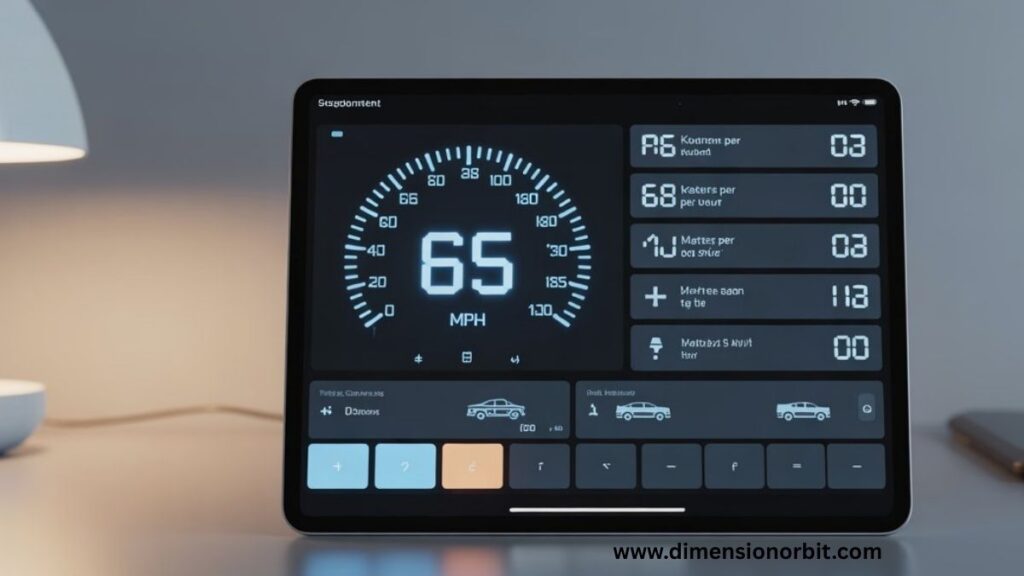
Speed measuring sounds simple until you’re late, staring at the clock, and suddenly questioning physics itself. We talk about speed every day, yet few people stop to ask what it actually measures or why numbers change from m/s to km/h to knots. One minute you’re cruising comfortably, the next you’re googling speed formulas like your life depends on it. This article breaks speed down without the textbook boredom. You’ll see how speed works, how it’s measured, and why different units exist. Expect clear explanations, real examples, and a few smiles along the way, because learning about motion shouldn’t feel slower than traffic on busy roads.
Universe Converter
Universe Converter
Length, weight, time, speed, data & more — all in one orbit.
Speed Meaning Explained in Simple Terms

At its most basic level, speed meaning comes down to one idea: how fast something moves. The formal speed definition describes speed as the amount of distance covered in a given amount of time. If an object travels a longer distance in less time, it has a higher speed. If it covers less distance over more time, its speed is lower.
Speed focuses only on “how fast,” not “where.” That single detail makes speed extremely useful in daily life. Whether a car moves north, south, or in a circle, speed stays the same as long as the rate of motion doesn’t change. This is why speed in physics is classified as a scalar quantity. Scalars have magnitude but no direction.
What Is Speed in Physics and Everyday Life

When people ask what is speed, they often expect a complicated scientific explanation. In reality, physics simply formalizes what people already understand intuitively. Speed describes motion by linking distance and time together.
In everyday life, speed shows up in obvious ways. Road speed limits guide drivers. Internet speed affects how quickly pages load. Walking speed determines how long a commute takes on foot. In science and engineering, speed plays a much bigger role. Engineers use speed to design engines, predict forces, and control machines. Athletes rely on speed measurements to improve performance and reduce injury risk.
The same concept works everywhere. Only the units change.
The Speed Formula and Why It Works

Speed formula looks simple because it is simple.
Speed equals distance divided by time.
This formula works because motion always involves covering space over a duration. When you understand this relationship, speed calculation becomes straightforward. The key is making sure distance and time units match. Kilometers must pair with hours. Meters must pair with seconds. Miles must pair with hours.
For example, if a car travels 120 kilometers in two hours, its speed is 60 kilometers per hour. If a runner covers 400 meters in 50 seconds, the average speed is 8 meters per second. The formula never changes. Only the scale does.
Volume Measurements A Complete Practical Guide
How Speed Is Measured in the Real World
Understanding how speed is measured helps explain why readings sometimes differ between devices. Every measurement method tracks movement over time, but each does it differently.
Traditional vehicle speedometers measure wheel rotation. As wheels spin faster, the speed reading increases. GPS based systems calculate speed by comparing changes in position over time. Radar systems, often used by traffic enforcement, measure speed by analyzing reflected radio waves.
Each method has strengths and weaknesses. Wheel-based systems respond instantly but can be affected by tire size. GPS systems provide stable averages but may lag slightly during sudden acceleration or braking. This is why people notice differences between dashboard speed readings and phone apps.
Units of Speed and Why They Exist

Many readers wonder why there are so many units of speed. The reason is practical, not scientific confusion. Different environments demand different scales.
Scientists prefer precision and consistency. Drivers prefer readability. Pilots and sailors need global standards that work with Earth’s geometry. No single unit fits every situation comfortably, so multiple speed measurement units coexist.
Time calculator A Practical Guide to Measurement
Meters per Second as the Scientific Speed Unit
The Meters per second is the official SI unit of speed. Scientists and engineers use it because it integrates smoothly with other metric units like meters, kilograms, and seconds.
In laboratories and physics classrooms, m/s speed simplifies calculations involving acceleration, force, and energy. A change of speed over time becomes acceleration in meters per second squared, which fits neatly into equations without extra conversions.
A practical example appears in sports science. When analysts track a sprinter’s performance, meters per second offers precise insight into acceleration phases, peak speed, and fatigue. Using kilometers per hour would make those calculations clumsy.
Kilometers per Hour in Daily Transportation
The Kilometers per hour dominates road systems across most of the world. Governments use km/h speed because it aligns naturally with metric distances and everyday travel patterns.
City driving typically ranges between 40 and 60 kilometers per hour. Highways often allow 90 to 130 kilometers per hour depending on location. Cyclists, pedestrians, and public transport systems also rely on km/h for consistency.
This unit works because it feels human-scaled. Drivers can easily judge whether a vehicle is moving slowly, moderately, or dangerously fast without mental conversion.
Miles per Hour and Regional Usage
Miles per hour remains common in regions that historically adopted imperial measurement systems. mph speed appears on road signs, speedometers, and weather forecasts.
Despite its regional nature, mph functions the same way as km/h. The difference lies only in the distance unit used. Drivers accustomed to mph develop the same intuitive sense of safe and unsafe speeds as those using kilometers per hour.
Switching systems would require replacing road signs, retraining drivers, and redesigning vehicles. That cost explains why mph persists.
Knots and Navigation Speed
Knots speed measures nautical miles per hour, which makes it ideal for navigation. A nautical mile corresponds to one minute of latitude on Earth’s surface. This alignment simplifies long-distance travel calculations at sea and in the air.
Ships rely on knots because marine charts use latitude and longitude. Aircraft use knots for the same reason, ensuring consistency between navigation systems worldwide.
A commercial cargo ship typically travels at around 20 knots. A passenger jet cruises near 460 to 500 knots. These numbers may look unfamiliar to drivers, but they fit their environment perfectly.
Speed Units Compared Clearly
| Unit | Common Name | Typical Use | Why It’s Used |
|---|---|---|---|
| m/s | meters per second | Physics and engineering | Scientific consistency |
| km/h | kilometers per hour | Road transport worldwide | Easy everyday understanding |
| mph | miles per hour | Regional road systems | Legacy measurement |
| knots | nautical miles per hour | Aviation and maritime | Global navigation accuracy |
This comparison alone clears up much of the confusion around speed units explained.
Speed vs Velocity Without the Confusion
People constantly ask about the difference between speed and velocity. The explanation is simpler than most textbooks make it.
Speed tells you how fast something moves. Velocity tells you how fast and in which direction it moves. Velocity includes direction, which makes it a vector quantity. Speed does not.
A car driving at 60 mph around a circular track maintains constant speed, but its velocity changes every second because its direction changes. That single example explains speed vs velocity better than long definitions.
Average Speed and Instantaneous Speed
Two types of speed matter in daily life: average speed and instantaneous speed.
Average speed measures total distance divided by total time. It smooths out stops, traffic, and delays. Instantaneous speed measures speed at a specific moment. Speedometers display instantaneous speed.
This difference explains why a two-hour trip covering 100 kilometers has an average speed of 50 km/h, even if the car spent most of the time moving at 100 km/h and sitting still in traffic. Understanding this prevents unrealistic travel expectations.
Real World Speed Examples That Matter
Speed affects safety, efficiency, and performance across industries. Transportation systems rely on speed limits to reduce accidents and control traffic flow. As speed increases, reaction time decreases and braking distance increases dramatically.
In sports, speed tracking helps athletes optimize training. Sprint speed, acceleration, and recovery rates guide coaching decisions. In manufacturing, speed controls production lines. Machines running too fast increase error rates and wear.
Weather forecasting also depends on speed. Wind speed determines storm severity. Ocean current speed influences climate models. Speed is never just a number.
How GPS and Modern Technology Measure Speed
Many users ask how GPS measures speed and why readings sometimes fluctuate. GPS systems calculate speed by tracking changes in position over time. The more stable the signal and movement, the more accurate the reading.
Radar speed measurement works differently. It detects frequency changes in reflected radio waves. This method provides highly accurate instantaneous readings, which explains its use in traffic enforcement.
Speed sensors in vehicles combine wheel rotation data with onboard computers. Each system prioritizes different strengths, which explains slight variations between readings.
Common Speed Calculation Mistakes to Avoid
Most errors come from mismatched units or assumptions. Mixing kilometers with minutes, rounding too early, or ignoring stop time leads to inaccurate results. These common speed measuring mistakes affect travel planning, academic work, and engineering estimates.
Accuracy improves when distance and time units stay consistent and calculations remain precise until the final step.
Why Understanding Speed Units Matters
Speed carries real consequences. Legal penalties depend on speed limits. Engineering safety depends on accurate motion measurement. Navigation errors threaten lives at sea and in the air. Even daily scheduling relies on realistic speed estimates.
Understanding speed measuring, speed measurement, and units of speed turns abstract numbers into reliable tools.
Digital tool
Digital tools like Feet and Inches Calculator can convert inches to centimeters or feet instantly. Many smartphone apps now offer augmented reality measuring features, allowing you to gauge objects virtually and compare them to known lengths.
FAQs
What is speed in physics?
Speed in physics describes how fast an object moves by measuring the distance it travels over a specific amount of time. It does not include direction, which is why scientists classify speed as a scalar quantity.
What does speed meaning refer to in everyday life?
In everyday use, speed meaning refers to how quickly something happens, such as how fast a car drives, how quickly data downloads, or how long it takes to walk from one place to another.
How do you calculate speed correctly?
You calculate speed by dividing distance by time. To avoid errors, always make sure the distance and time units match, such as kilometers with hours or meters with seconds.
What are the main units of speed?
The most common units of speed are meters per second, kilometers per hour, miles per hour, and knots. Each unit exists because different fields like science, road travel, and navigation need different scales.
Why are speed measurement units different around the world?
Speed measuring units differ because of historical measurement systems, regional standards, and practical needs. Road systems, scientific research, and navigation all favor different units.
What is the difference between speed and velocity?
Speed measuring how fast something moves, while velocity measures both speed measuring and direction. This difference explains why an object can have constant speed but changing velocity.
What is average speed and how is it different from instantaneous speed?
Average speed calculates total distance over total time, while instantaneous speed shows how fast something is moving at a specific moment, like the reading on a speedometer.
Why do ships and airplanes use knots instead of km/h?
Ships and airplanes use knots because they align with nautical miles, which match Earth’s latitude system and make long distance navigation more accurate.
How does GPS measure speed?
GPS measures speed by tracking changes in position over time. Slight delays or signal changes can cause small differences compared to vehicle speedometers.
Why does understanding speed matter in real life?
Understanding speed helps improve safety, avoid calculation mistakes, plan travel accurately, and make better decisions in transportation, engineering, and everyday movement.
Final Thought
Speed looks simple on the surface, but it quietly shapes safety, science, travel, and daily decisions. Once you understand speed measuring, how it’s measured, and why different units exist, the numbers stop feeling random. They start making sense. From road signs to GPS screens to physics formulas, speed becomes a tool you can trust instead of a value you guess. When distance and time work together, motion becomes predictable, planning improves, and mistakes drop fast. In the end, understanding speed isn’t about moving faster. It’s about moving smarter, safer, and with confidence every time.

Jhon AJS, the author of Dimension Orbit, is an experienced blogger fascinated by the mysteries of existence. He explores every type of dimension from scientific to spiritual with clarity and creativity. Jhon’s engaging writing style invites readers to think deeper, question reality, and discover new perspectives on the universe.