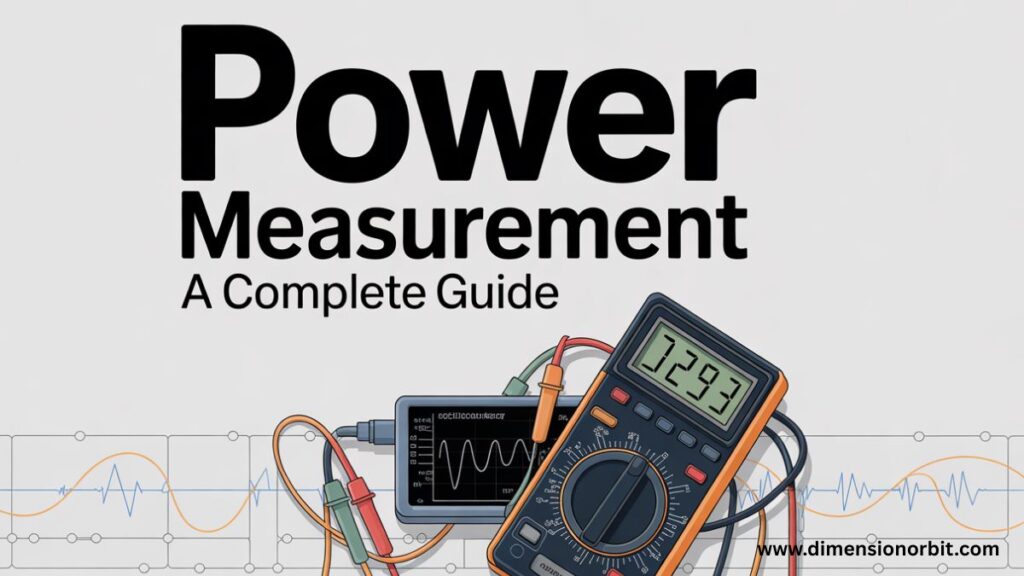
Power loves drama. It roars in car ads, hums in laptops, and quietly drains your electricity bill while you sleep. Still, most people confuse power with energy and hope no one notices. This guide, Power Measurement Units, and Applications, clears that mess with a smile. Power isn’t about how much energy you have. It’s about how fast you use it. That single idea explains why microwaves feel impatient, engines feel aggressive, and batteries feel disappointing at the worst times. You’ll learn what power really means, how it’s measured, and why understanding power makes machines, costs, and performance suddenly make sense.
Universe Converter
Universe Converter
Length, weight, time, speed, data & more — all in one orbit.
What Is Power?
Power answers a simple but critical question: how quickly does something do work or use energy? That’s the heart of power meaning. Energy tells you the total amount available. Power tells you the rate of use.
Imagine two people lifting the same box onto the same shelf. Both perform the same amount of work because the box ends up at the same height. One lifts it slowly. The other lifts it quickly. The fast lifter delivers more power, even though the energy used is similar. Power always involves time, and without time, power doesn’t exist.
This idea applies everywhere, from engines and electrical systems to human muscles and computers.
Energy measurement A Practical Guide
Power vs Energy The Difference That Changes Everything
People constantly confuse power with energy, and that confusion causes bad decisions. Energy answers “how much.” Power answers “how fast.”
A device can use a lot of energy very slowly or a little energy very quickly. A space heater and a microwave make this difference obvious. The heater runs at lower power for a long time. The microwave runs at high power for a short time. Both use energy, but they feel completely different in use.
Understanding this difference helps explain electricity bills, performance ratings, and why some tools feel stronger even when they don’t consume more total energy.
How Power Is Measured
Power measurement always connects energy and time. In simple terms, power equals energy divided by time. That relationship never changes, no matter the system.
In electrical systems, power depends on voltage and current. In mechanical systems, power depends on force and speed. The formulas change, but the meaning stays the same. Faster energy transfer means higher power.
This consistency makes power one of the most reliable concepts in physics and engineering.
Data Measurement A Complete Guide
The Watt The Foundation of Power Measurement
Watt is the standard unit of power. One watt represents one unit of energy used every second. While that sounds small, watts scale easily to describe everything from phone chargers to industrial machines.
When you see a watt rating on an appliance, it tells you how aggressively that device consumes energy. A higher watt rating means faster energy use, more heat generation, and higher demand on electrical systems.
Watts don’t measure quality or efficiency. They measure speed.
Kilowatts and Everyday Electricity
As systems grow larger, watts become inconvenient. That’s where kilowatts come in. One kilowatt equals one thousand watts, making numbers easier to read and compare.
Homes, offices, and small businesses typically operate in kilowatts. Air conditioners, electric heaters, and ovens often sit in this range. Electrical service connections are rated in kilowatts because they reflect realistic demand levels.
This also explains a common misunderstanding. Electricity bills charge for energy over time, not power. Kilowatt-hours combine power and time into a single value, which tells you how much energy you actually used.
Pressure Measurement A Practical Guide
Megawatts and Large Scale Power Systems
When dealing with power plants and national grids, even kilowatts fall short. Megawatts step in at this scale. One megawatt equals one million watts.
Cities consume power in the hundreds or thousands of megawatts. Power stations, wind farms, and solar plants describe their output in megawatts because it reflects grid level impact. Renewable energy projects rely heavily on this unit because production varies with weather and demand.
Megawatts aren’t about individual devices. They describe entire systems keeping modern life running.
Horsepower and Mechanical Tradition

The Horsepower existed long before modern electrical units, and it still refuses to disappear. It originated as a way to compare engine output to the work a horse could perform, which made early machines easier to understand.
One horsepower equals roughly 746 watts. Today, vehicles and motors still use horsepower because it feels intuitive. People can picture it, even if they don’t know the exact conversion.
Horsepower may be old fashioned, but in mechanical contexts, it remains useful and familiar.
Why Power Units Differ
Power units didn’t multiply randomly. Each one emerged to solve a practical problem. Scientists needed precise units that fit equations cleanly. Engineers wanted numbers that stayed readable. Mechanics preferred familiar comparisons. Grid operators needed scalable units for massive demand.
Different industries kept the units that worked best for them. That’s why no single power unit dominates every field.
Electrical Power in Daily Life
Electrical power shapes modern living more than almost any other measurement. It determines how fast devices operate, how much heat they generate, and how safely they run.
Higher power means higher energy flow, which requires thicker wires, better insulation, and proper protection. Ignoring power ratings leads to overheated circuits and damaged equipment.
Power ratings aren’t suggestions. They’re limits.
Mechanical Power in Machines and Engines
Mechanical power shows up whenever force causes motion. In rotating machines, power depends on how much twisting force exists and how fast rotation occurs.
An engine producing strong torque at low speed can deliver the same power as an engine producing weaker torque at higher speed. That’s why gears exist. They trade speed for force while keeping power nearly constant.
This balance explains why peak torque alone never tells the full performance story.
Power in Transportation
Transportation systems live and die by power management. Cars need enough power to accelerate and climb hills. Trains rely on steady high power to move heavy loads efficiently. Aircraft demand enormous power during takeoff and lower sustained power during cruising.
Electric vehicles highlight power differences clearly. High power motors provide instant acceleration, while battery capacity limits how long that power lasts.
Power determines feel. Energy determines range.
Power in Computing and Electronics
Modern electronics push power limits constantly. Processors draw bursts of power that generate heat almost instantly. Cooling systems exist solely to manage that heat.
Data centers track power usage obsessively because small efficiency gains save enormous amounts of money. In mobile devices, power control matters more than raw performance because battery life depends on limiting power draw.
In computing, power efficiency often matters more than speed.
Power Losses and Efficiency
Not all power becomes useful work. Some always escapes as heat, vibration, or sound. Efficiency measures how much of the input power actually produces the desired result.
Improving efficiency doesn’t increase power output. It reduces waste. That distinction matters for engines, electronics, and renewable energy systems.
High efficiency means doing more with less power, not forcing systems harder.
Common Power Mistakes
One of the most common mistakes is confusing power with energy. Watts and watt-hours describe different things. Another mistake involves assuming higher power always means better performance. Context matters.
Misunderstanding power ratings leads to overloaded circuits, poor equipment choices, and unexpected failures. Once you understand power properly, these mistakes disappear.
Choosing the Right Power Unit
The right Power Measurement unit depends entirely on context. Small devices use watts. Buildings use kilowatts. Power plants use megawatts. Engines often use horsepower.
No unit is superior on its own. The best unit is the one that communicates clearly without confusion.
Digital tool
Digital tools like Feet and Inches Calculator can convert inches to centimeters or feet instantly. Many smartphone apps now offer augmented reality measuring features, allowing you to gauge objects virtually and compare them to known lengths.
FAQs
What is power in simple words?
Power means how fast energy is used or how quickly work is done. It focuses on speed, not total energy.
What is the difference between power and energy?
Energy tells you how much is available. Power tells you how fast that energy is being used.
What is the SI unit of power?
The SI unit of power is the watt, which represents one unit of energy used every second.
Why are watts used for electrical devices?
Watts show how quickly a device consumes energy, which helps determine wiring needs, safety limits, and performance.
What is the difference between watts and kilowatts?
A kilowatt equals one thousand watts and is used for larger devices and household power ratings.
Why is horsepower still used?
Horsepower remains common for engines because it offers an intuitive way to compare mechanical performance.
How is electrical power calculated?
Electrical power is calculated using voltage and current, showing how fast electrical energy flows through a system.
Does higher power always mean better performance?
Not always. Higher power means faster energy use, but efficiency and design also affect performance.
Why do electricity bills use kilowatt-hours instead of watts?
Kilowatt-hours measure energy used over time, while watts only describe power at a moment.
Where is power used in daily life?
Power appears in appliances, vehicles, computers, lighting systems, and almost every modern technology.
Final Thoughts
Power stops being confusing once you see it for what it really is. It doesn’t measure how much energy exists. It measures how fast that energy gets used. That difference explains why some machines feel quick and aggressive while others work slowly but steadily. When you understand power meaning, power measurement units, and how power works in real world applications, everyday choices become easier. You read labels correctly, avoid overloads, and compare performance without guessing. Power Measurement isn’t about hype or raw strength. It’s about speed, timing, and control, and once you get that, technology finally starts speaking your language.

Jhon AJS, the author of Dimension Orbit, is an experienced blogger fascinated by the mysteries of existence. He explores every type of dimension from scientific to spiritual with clarity and creativity. Jhon’s engaging writing style invites readers to think deeper, question reality, and discover new perspectives on the universe.