Pressure shows up in your life like an uninvited guest. It pops tires, lifts bridges, changes weather, and makes your ears complain on flights. Yet most people only think of pressure when deadlines pile up. In reality, pressure meaning has nothing to do with stress and everything to do with force and area. This guide, Pressure Measurement Units, and Applications, explains why sharp knives cut better, why blood flows, and why machines don’t explode when designed correctly. You’ll learn how pressure is measured, why units differ, and how understanding pressure quietly saves money, energy, and sometimes your sanity in everyday decisions too matters.
Universe Converter
Universe Converter
Length, weight, time, speed, data & more — all in one orbit.
What Is Pressure in Simple Words?
At its core, pressure definition is straightforward. Pressure is the amount of force applied over a specific area. The key idea isn’t just force. The area matters just as much.
Imagine standing barefoot on soft sand. Your feet sink slightly, but you stay upright. Now imagine standing on the same sand while wearing shoes with very thin heels. Suddenly, you sink much deeper. Your weight hasn’t changed. The force is the same. What changed is the area. A smaller area creates more pressure.
That single idea explains why sharp knives cut better, why tanks use wide tracks instead of thin wheels, and why snowshoes work so well on deep snow. The Pressure depends on how concentrated a force is, not just how strong it is.
Energy measurement A Practical Guide
Pressure vs Force Why the Difference Matters
People often mix up pressure and force, especially when first learning pressure in physics. Force tells you how hard something pushes or pulls. Pressure tells you how focused that push is.
If a heavy box rests on the floor, it applies force due to its weight. The box has a wide base, that force spreads out, and pressure stays low. If the same box rests on a narrow edge, pressure increases sharply. Floors crack, surfaces dent, and materials fail because of pressure, not force alone.
This misunderstanding causes real problems in engineering and design. Loads may look safe when considering force alone, but pressure reveals the true risk. Once you separate these ideas, pressure calculation becomes far easier to understand.
The Pressure Formula and Why It Always Works

Pressure formula expresses this relationship clearly. Pressure equals force divided by area. In physics notation, that relationship is written as P equals F divided by A.
This formula applies everywhere, from microscopic physics to massive industrial systems. Change the force, and pressure changes. Change the area, and pressure changes again. Nothing about the formula depends on the units you choose. Only the numbers and labels change.
This consistency explains why pressure behaves predictably across different systems, even when the units look completely different.
Temperature Measurement Scales
How Pressure Is Measured in the Real World
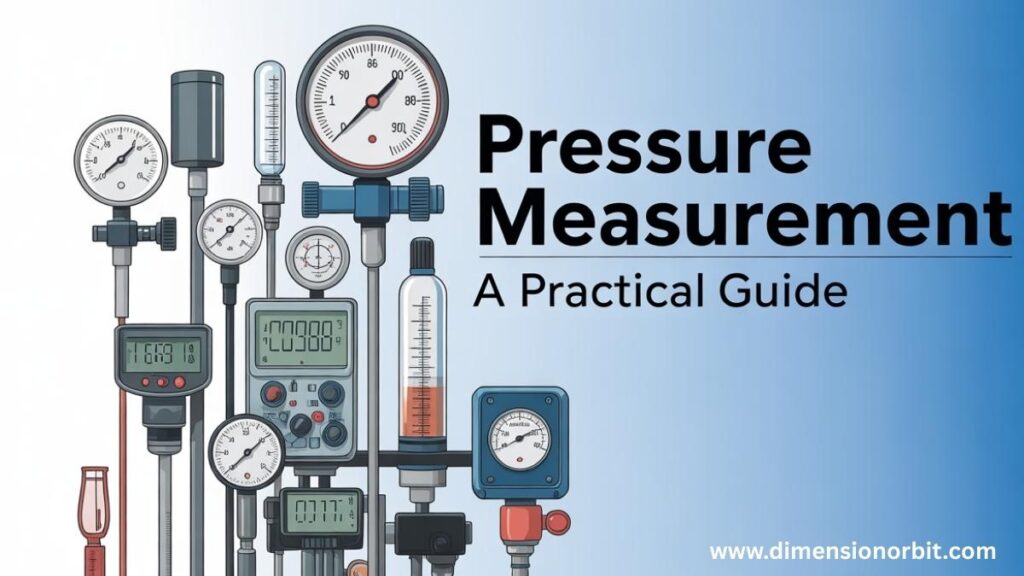
Pressure measurement relies on detecting how force acts on a surface. Over centuries, humans developed tools to turn invisible pressure into readable values.
In simple mechanical systems, pressure pushes against springs, diaphragms, or fluids. That movement gets translated into a needle position on a dial. In modern systems, pressure sensors convert physical pressure into electrical signals that computers can read instantly.
Accuracy matters. In industrial systems, incorrect pressure readings can rupture pipes or destroy equipment. In medicine, inaccurate pressure readings can hide serious health risks. That’s why modern systems often use multiple sensors and safety checks instead of relying on a single measurement.
The SI Unit of Pressure and Why It’s So Small
The official SI unit of pressure is the pascal. One pascal equals one newton of force applied over one square meter. While this definition fits perfectly into the metric system, it creates very small numbers in everyday situations.
Normal atmospheric pressure at sea level measures about 101,325 pascals. Writing and reading such large numbers repeatedly becomes inconvenient. For that reason, pascals are mostly used in scientific formulas, research papers, and theoretical calculations.
When people talk about pressure measurement units, they often choose larger units simply to keep numbers readable and practical.
Data Measurement A Complete Guide
Kilopascals and Everyday Practicality

To solve the readability problem, engineers and scientists use kilopascals. One kilopascal equals one thousand pascals. This simple scaling makes pressure values much easier to handle.
Weather reports often use kilopascals. Atmospheric pressure near sea level measures around 101.3 kilopascals, which feels far more manageable than six-digit pascal values. Engineering documents, vehicle specifications, and construction standards also rely heavily on kilopascals in countries that follow the metric system.
The physics doesn’t change. Only the label does.
Bar and Industrial Pressure Systems
The bar unit exists because industry needed a pressure unit that closely matches atmospheric pressure while keeping calculations simple. One bar equals 100,000 pascals, which is very close to one atmosphere.
Because of this, bar became popular in mechanical engineering, hydraulics, and compressed air systems. Many industrial machines, pressure vessels, and compressors list operating limits in bar because the numbers stay clean and intuitive.
When people compare bar vs atm pressure, the difference is small but important in precise calculations. Engineers choose bar when practicality matters more than perfect alignment with natural atmospheric pressure.
Atmospheric Pressure Explained Without Complexity
Atmospheric pressure refers to the pressure exerted by the weight of the air above you. At sea level, this pressure equals one atmosphere. That value comes from measuring how much force air applies to a surface due to gravity.
As altitude increases, less air sits above you. Pressure drops. This change explains why breathing becomes difficult at high altitudes and why airplanes must pressurize their cabins.
In chemistry and physics, the atmosphere unit provides a convenient reference point. It allows scientists to describe conditions as “normal” without listing exact numerical values every time.
Psi and the Imperial Measurement System
In the United States, pressure often appears in pounds per square inch, commonly called psi. The psi pressure meaning ties pressure to imperial units of force and area.
Psi works well for mechanical systems like tires, hydraulic equipment, and air compressors. A typical car tire operates around thirty to thirty-five psi. Bicycle tires run much higher. Industrial hydraulic systems can reach thousands of psi.
The continued use of psi reflects regional habits rather than scientific superiority. The physics stays identical whether you measure pressure in psi or pascals.
Why So Many Pressure Units Exist
Many people wonder why pressure units differ so much across fields. The answer lies in history, convenience, and industry needs.
Scientists prefer SI units because they integrate smoothly with equations and constants. Engineers prefer units that keep numbers readable and reduce calculation errors. Medical professionals use specialized units that match biological systems. Aviation relies on altitude-based pressure references.
Each unit evolved to solve a real problem. None exist without reason.
Pressure in Engineering and Technology
Pressure in engineering plays a central role in safety and performance. Hydraulic systems rely on pressure to multiply force efficiently. A small input force creates enormous output force because pressure transmits evenly through fluids.
Pneumatic systems use compressed air pressure to power tools and automation. Structural engineers calculate pressure loads to prevent collapse. Even electronic manufacturing relies on precise pressure control during fabrication.
Pressure mistakes don’t just reduce efficiency. They cause failures.
Pressure in Daily Life You Probably Ignore
Pressure surrounds you constantly. Water pressure pushes water through pipes into your home. Air pressure keeps tires inflated and cushions impacts. Atmospheric pressure shapes weather patterns and influences how storms form.
Ignoring pressure leads to burst pipes, underinflated tires, and inefficient systems. Understanding pressure helps you spot problems before they turn expensive.
Blood Pressure and Human Health
Blood pressure measurement offers one of the most important examples of pressure and measures how strongly blood pushes against artery walls as the heart pumps.
Doctors record blood pressure using two numbers. The first represents pressure during heart contraction. The second represents pressure when the heart relaxes. Normal adult values typically sit around 120 over 80 millimeters of mercury.
Persistent high pressure damages blood vessels over time. That’s why accurate pressure measurement saves lives.
Pressure and Weather Systems
Weather exists because of pressure differences. High-pressure systems push air downward, often bringing clear skies. Low-pressure systems pull air upward, creating clouds and precipitation.
Meteorologists track atmospheric pressure closely because even small changes signal major weather shifts. Hurricanes, storms, and wind patterns all depend on pressure gradients.
Pressure doesn’t just describe weather. It drives it.
Absolute Pressure vs Gauge Pressure
One of the most common sources of confusion involves absolute and gauge pressure. Gauge pressure measures pressure relative to atmospheric pressure. Absolute pressure measures pressure relative to a perfect vacuum.
When a tire gauge reads zero, air pressure still exists inside the tire. The gauge simply measures pressure above atmospheric levels. Mixing these two concepts leads to calculation errors, especially in engineering systems.
Choosing the correct reference point matters more than most people realize.
How Altitude Changes Pressure
As you climb higher above sea level, air pressure drops. This change affects breathing, boiling points, and aircraft performance. Water boils at lower temperatures at high altitude because lower pressure allows molecules to escape more easily.
Aircraft cabins maintain artificial pressure levels to keep passengers comfortable. Mountain climbers ascend slowly so their bodies can adapt to reduced pressure. Altitude and pressure remain inseparable.
Pressure Conversion Mistakes and Why They Happen
Pressure conversions look simple but often cause trouble. Confusion usually comes from mixing units, forgetting scale factors, or ignoring reference pressure.
Using reliable tools like a pressure unit converter or a pressure formula calculator prevents errors. Professionals rely on these tools because pressure mistakes carry real consequences.
Choosing the Right Pressure Unit for the Job
No single pressure unit fits every situation. Scientists use pascals for equations. Engineers prefer bar or psi for machinery. Meteorologists use kilopascals or millibars. Doctors rely on medical-specific units.
Choosing the right unit improves clarity and reduces mistakes. Memorizing conversions matters less than understanding context.
Digital tool
Digital tools like Feet and Inches Calculator can convert inches to centimeters or feet instantly. Many smartphone apps now offer augmented reality measuring features, allowing you to gauge objects virtually and compare them to known lengths.
FAQs
What is pressure in simple words?
Pressure is how strongly a force pushes on a surface. The smaller the area, the higher the pressure, even if the force stays the same.
What is pressure meaning in physics?
In physics, pressure means force per unit area. It explains how force spreads out or concentrates on a surface.
What is the pressure formula?
The pressure formula is force divided by area. It shows why changing area changes pressure even when force stays constant.
What are pressure measurement units?
Pressure measurement units include pascal, kilopascal, bar, atmosphere, and psi. Different fields use different units for convenience and accuracy.
Why is pascal considered a small unit?
Pascal is small because everyday pressures involve large forces over wide areas, resulting in very high numbers when measured in pascals.
Why are there so many pressure units?
Pressure units differ because science, engineering, medicine, and industry developed systems that fit their specific needs and tools.
What is the difference between pressure and force?
Force measures how hard something pushes. Pressure measures how concentrated that push is over an area.
What is atmospheric pressure?
Atmospheric pressure is the force exerted by the weight of air above Earth’s surface. It changes with altitude and weather.
How does pressure change with altitude?
Pressure decreases as altitude increases because there is less air above you pushing downward.
What is the difference between absolute pressure and gauge pressure?
Absolute pressure measures pressure relative to a vacuum. Gauge pressure measures pressure relative to atmospheric pressure.
Where is pressure used in daily life?
Pressure appears in tire inflation, water supply systems, weather patterns, blood circulation, and household appliances.
Why is pressure important in engineering?
Pressure helps engineers design safe systems. Incorrect pressure calculations can cause leaks, failures, or dangerous accidents.
Final Thoughts
Pressure may sound technical, but it’s one of the most practical ideas you’ll ever learn. It explains why things cut, lift, flow, breathe, and sometimes fail in dramatic ways. Once you truly understand pressure meaning, pressure measurement units, and how pressure works in real-world applications, you stop guessing and start making smarter choices. Whether you’re checking tire pressure, reading weather reports, or designing systems that must stay safe under load, pressure becomes a helpful guide instead of a mystery. Master the concept, respect the numbers, and pressure stops being a problem and starts being a powerful tool.

Jhon AJS, the author of Dimension Orbit, is an experienced blogger fascinated by the mysteries of existence. He explores every type of dimension from scientific to spiritual with clarity and creativity. Jhon’s engaging writing style invites readers to think deeper, question reality, and discover new perspectives on the universe.