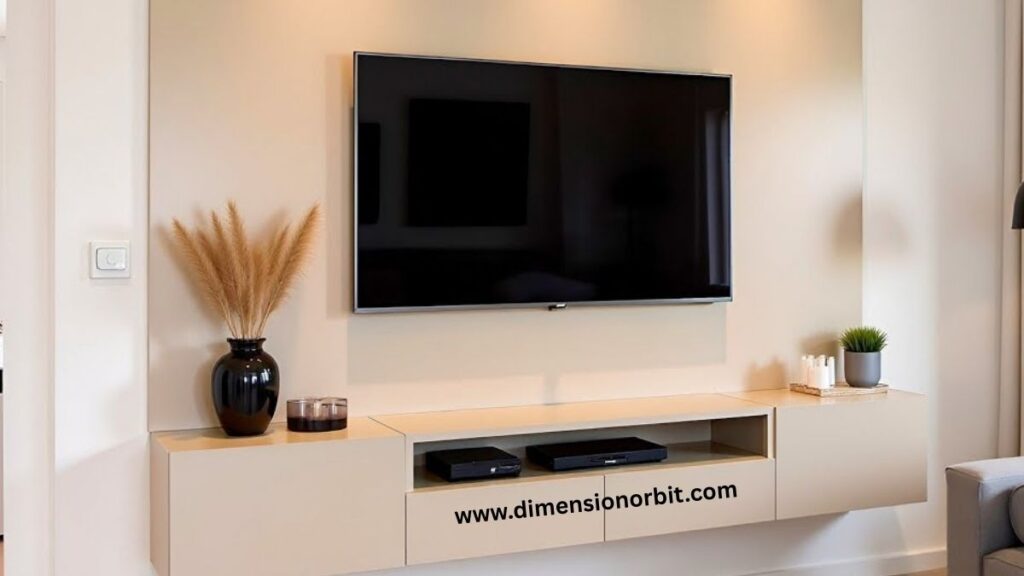
Tv mounting height on the wall should make watching easier, not harder. Yet many people discover weeks later that something feels off. Their neck hurts. Their eyes feel strained. Long movies suddenly feel exhausting. In almost every case, the problem is not the TV itself. It is the TV height from floor or the TV viewing distance.
Optimal TV height and ideal TV viewing distance are not opinions or design trends. They are based on human posture, eye movement, and long established ergonomic principles. When these factors line up, watching TV feels effortless. When they do not, even the most expensive TV becomes uncomfortable.
This guide explains how high a TV should be mounted, how far you should sit from it, and how those answers change depending on screen size, room type, and resolution. Everything here reflects real measurements used by professional installers and home theater designers.
Why Optimal TV Height Matters More Than You Think
Screen size gets most of the attention, but height determines comfort. When a wall mounted TV sits too high, your neck tilts upward. That tilt might seem minor, but the human neck is not designed to stay extended for long periods. Muscle tension builds quickly. Eye fatigue follows. Headaches often appear after longer viewing sessions.
The human body prefers neutral posture. Your head naturally balances over your spine, and your eyes are most relaxed when looking straight ahead. That is why eye level viewing forms the foundation of proper TV placement.
A TV that looks visually centered on a wall can still be ergonomically wrong. Walls do not watch TV. People do.
Eye Level Viewing Explained in Simple Terms
A Eye level viewing means that when you sit in your normal viewing position, your eyes naturally meet the center of the TV screen. You do not raise your chin or tilt your head downward. Your gaze stays relaxed and straight.
For most adults, seated eye level measures between 40 and 43 inches from the floor. This range accounts for typical sofa height, cushion compression, and relaxed posture. It is the same range used in ergonomic office and furniture design.
Because eye level varies slightly from person to person, this range works better than a single fixed number. However, most living rooms land very close to the middle of that range.
Optimal TV Height From Floor to Screen Center
For the majority of living rooms, the ideal TV mounting height places the center of the screen about 42 inches from the floor. This measurement aligns closely with average seated eye level and provides consistent comfort across different viewer heights.
This measurement always refers to the center of the screen, not the bottom or top edge. Screen edges vary dramatically with TV size, but eye level does not.
Once the center point is correct, the rest of the installation usually falls into place naturally.
TV Mounting Height by Screen Size
Screen size changes how tall the TV is, but it does not change where your eyes are. Larger TVs extend farther above and below the center point, which is why many installations go wrong when people raise the entire TV to “fit the wall.”
| TV Size | Approximate Screen Height | Recommended Screen Center Height |
|---|---|---|
| 55 inch TV | About 27 inches | About 42 inches |
| 65 inch TV mounting height | About 32 inches | About 42 inches |
| 75 inch TV mounting height | About 37 inches | About 42 inches |
| 85 inch TV mounting height | About 42 inches | About 42 inches |
| 86 inch TV mounting height | About 43 inches | About 42 inches |
This table shows why mounting a larger TV higher is unnecessary. The screen center remains the same, while only the edges move.
TV Viewing Distance and Why It Is Just as Important
Even perfect height cannot compensate for poor viewing distance. TV viewing distance determines how much of your field of view the screen occupies and how hard your eyes work to process the image.
If you sit too close, your eyes constantly scan across the screen, which increases fatigue. If you sit too far away, fine details disappear and immersion drops.
Resolution plays a major role because higher pixel density allows closer seating without visible pixel structure.
Ideal TV Viewing Distance by Resolution
| TV Resolution | Recommended Viewing Distance |
|---|---|
| 1080p TV | 1.5 to 2.5 times the screen size |
| 4K TV viewing distance | 1 to 1.5 times the screen size |
| 8K TV viewing distance | 0.75 to 1 times the screen size |
For most modern homes, 4K TVs offer the best balance. They allow closer seating without eye strain and work well with large screen sizes in average sized rooms.
Viewing Distance by TV Size for 4K TVs
| TV Size | Ideal Viewing Distance |
|---|---|
| 55 inch TV | About 5.5 to 7 feet |
| 65 inch TV | About 6.5 to 8 feet |
| 75 inch TV | About 7 to 9 feet |
| 85 inch TV | About 8 to 10 feet |
When seating falls outside these ranges, the TV can feel overwhelming or underwhelming regardless of mounting height.
Living Room TV Height vs Bedroom TV Height
TV height depends heavily on viewing posture, which changes by room.
In a living room, people sit upright on sofas or chairs. Their eyes remain relatively level, making eye level placement ideal. This is where the classic forty two inch screen center works best.
In a bedroom, viewers usually recline or lie back against pillows. The head tilts upward slightly, allowing the TV to sit higher without causing discomfort.
| Room Type | Typical Viewing Posture | Recommended Screen Center Height |
|---|---|---|
| Living room | Upright seating | About 40–43 inches |
| Family room | Mixed seating | About 42–45 inches |
| Bedroom | Reclined viewing | About 45–50 inches |
| Recliner seating | Leaned back | About 43–46 inches |
The room itself does not determine height. Viewing posture does.
Mounting a TV Over a Fireplace: Comfort vs Aesthetics
Mounting a TV above a fireplace remains popular because fireplaces act as natural focal points. Visually, the setup can look clean and intentional.
Ergonomically, it is rarely ideal. Fireplaces typically push the TV well above eye level, often placing the screen center above sixty inches. This creates a steep vertical viewing angle that strains the neck during long sessions.
| Fireplace Setup | Expected Comfort Level |
|---|---|
| Low mantel with tilt mount | Acceptable |
| High mantel without tilt | Poor |
| Screen center above 60 inches | High neck strain risk |
| Inadequate heat clearance | Reduced TV lifespan |
A tilt mount can reduce strain but cannot fully correct excessive height. Mounting a TV over a fireplace is always a compromise.
Furniture Under the TV and Why It Matters
Furniture often forces TVs higher than they should be. Tall media consoles, soundbars, and built in cabinetry can all affect placement.
This is why TV height from floor should always be measured after furniture is in place. Measuring too early almost always results in a TV that ends up too high once everything is installed.
How Mount Type Influences TV Height
| Mount Type | Height Flexibility | Best Use Case |
|---|---|---|
| Fixed mount | None | Eye level installations |
| Tilt mount | Moderate | Slightly high placements |
| Full motion mount | High | Multiple seating areas |
Mounts can adjust viewing angles, but they cannot fix poor initial height decisions.
Real World Example: Proper 75 Inch TV Setup
In a fourteen by eighteen foot living room, a seventy five inch 4K TV was mounted with the screen center at forty two inches from the floor. Seating distance measured just over eight feet.
The setup felt immediately comfortable. Long viewing sessions caused no neck strain or eye fatigue. When the TV was raised by ten inches for testing, discomfort appeared within minutes. Nothing else changed.
This example shows how sensitive comfort is to vertical placement.
Final Guidance for Optimal TV Height and Viewing Distance
| Viewing Purpose | Recommended Setup |
|---|---|
| Everyday TV watching | Eye level screen center |
| Movie viewing | Eye level with closer distance |
| Gaming | Eye level or slightly lower |
| Bedroom viewing | Slightly higher center |
Across all use cases, correct TV height and viewing distance matter more than upgrading resolution or buying a larger screen.
Digital tool
Digital tools like Feet and Inches Calculator can convert inches to centimeters or feet instantly. Many smartphone apps now offer augmented reality measuring features, allowing you to gauge objects virtually and compare them to known lengths.
How high should a TV be mounted on the wall?
For most living rooms, the ideal wall mounted TV height places the center of the screen at about 40 to 43 inches from the floor. This aligns the screen with seated eye level and helps prevent neck strain and eye fatigue during long viewing sessions.
What is the ideal TV height from the floor?
The ideal TV height from the floor is measured to the center of the screen, not the bottom or top edge. In standard seating setups, this measurement is typically around 42 inches, which matches average seated eye level for most adults.
How high should a 75 inch TV be mounted?
A 75 inch TV should follow the same eye level rule as smaller screens. The recommended mounting height places the screen center near 42 inches from the floor when viewed from a standard sofa at normal seating height.
What is the best TV height for a living room?
The best TV height for a living room keeps the screen center aligned with seated eye level, usually between 40 and 43 inches from the floor. This height works well for upright seating and shared viewing areas.
How high should a TV be mounted in a bedroom?
In a bedroom, viewers often recline or lie back, which allows the TV to be mounted slightly higher. A screen center height between 45 and 50 inches from the floor typically provides comfortable viewing from a bed.
Should a TV be mounted at eye level?
Yes. Mounting a TV at eye level is the most ergonomic option. Eye level viewing keeps the neck in a neutral position and reduces eye strain, making it ideal for long periods of watching TV.
Is mounting a TV too high bad for your neck?
Yes. Mounting a TV too high forces the neck to tilt upward, which can lead to muscle tension, stiffness, and headaches over time. Proper TV height helps maintain a neutral viewing posture.
How far should you sit from a TV?
The ideal viewing distance depends on screen size and resolution. For a 4K TV, most viewers are comfortable sitting one to one and a half times the screen size away from the TV.
What is the ideal viewing distance for a 75 inch TV?
For a 75 inch 4K TV, the ideal viewing distance is typically between 7 and 9 feet. This distance provides an immersive viewing experience without causing eye fatigue.
Is it bad to mount a TV over a fireplace?
Mounting a TV over a fireplace is not ideal for comfort because it places the screen above eye level. While it may look visually appealing, it can cause neck strain during long viewing sessions unless a tilt mount is used.
What is the best height for a wall mounted TV?
The best height for a wall mounted TV places the center of the screen at seated eye level, which is around 42 inches from the floor for most living rooms. This setup provides the most comfortable and natural viewing experience.
Does TV size affect mounting height?
TV size affects the overall height of the screen, but it should not change where the center of the screen is placed. Regardless of size, the screen center should remain aligned with eye level for optimal comfort.
Can a tilt mount fix a TV that is mounted too high?
A tilt mount can reduce discomfort by angling the screen downward, but it cannot fully fix a TV that is mounted far above eye level. Proper initial height is always the best solution.
Final Thoughts
Getting the optimal TV height and viewing distance right is not about following trends or copying what looks good online. It is about how your body actually sits, how your eyes naturally focus, and how long you spend watching your screen every day.
When a TV is mounted at the correct height and paired with the right viewing distance, watching feels effortless. Your neck stays relaxed. Your eyes don’t strain. Long movies, gaming sessions, and everyday viewing all feel comfortable instead of tiring.
The biggest mistake people make is prioritizing wall symmetry or design over ergonomics. A TV that looks slightly lower on the wall often delivers a far better experience than one mounted high for visual balance. Comfort always matters more than appearance.
If you remember one thing, let it be this: align the center of the screen with your seated eye level and choose a viewing distance that matches your screen size and resolution. Do that, and even a modest TV can feel premium.
Measure carefully. Plan before drilling. Focus on how you actually watch TV. When you do, your setup will feel right every single time you sit down.

Jhon AJS, the author of Dimension Orbit, is an experienced blogger fascinated by the mysteries of existence. He explores every type of dimension from scientific to spiritual with clarity and creativity. Jhon’s engaging writing style invites readers to think deeper, question reality, and discover new perspectives on the universe.