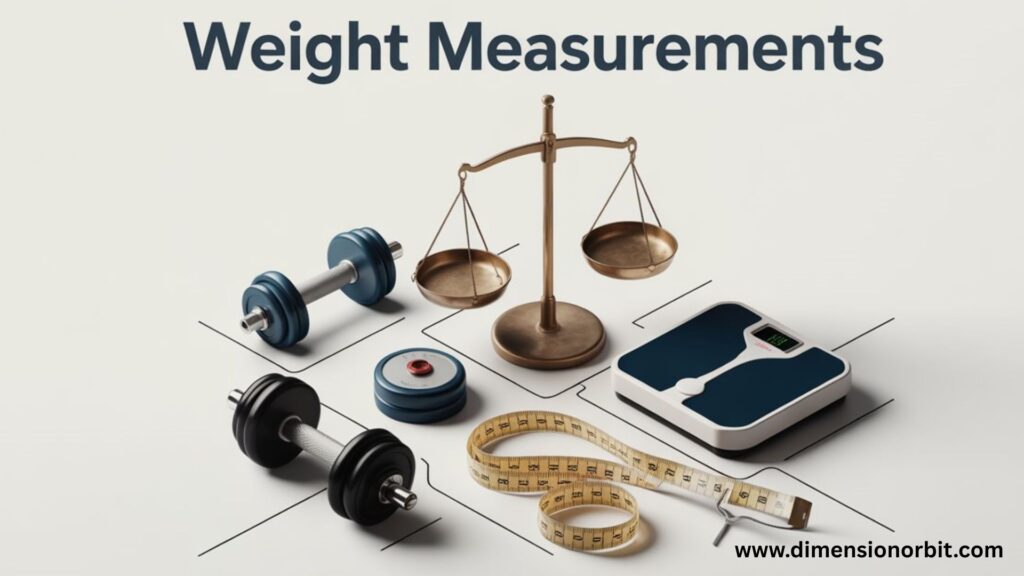
Weight measurements sounds boring until it suddenly controls your life. One minute you’re casually stepping on a scale. Next minute, you’re questioning gravity, calories, and why a suitcase magically gains weight at the airport. Weighing food, checking body weight, shipping packages, or reading labels all seem simple. However, tiny mistakes create big headaches fast. That’s where understanding weight measurements really matters. This guide breaks it down without lectures or science class yawns. You’ll learn what weight is, why weight vs mass causes confusion, and how weight units actually work in daily life. Think clarity, real examples, and fewer “wait, how?” moments for everyday decisions that matter.
Universe Converter
Universe Converter
Length, weight, time, speed, data & more — all in one orbit.
Why Weight Measurements Still Matters Every Single Day
Weight isn’t just a number on a scale. It affects decisions, money, safety, and health.
You rely on proper weight measurement when you:
- Track body weight and fitness progress
- Measure food ingredients accurately
- Calculate shipping costs
- Read nutrition labels
- Dispense medicine
- Manufacture or package products
A tiny error may feel harmless. However, small mistakes add up fast. In shipping alone, incorrect weight reporting leads to overcharges, delays, and compliance issues.
That’s why understanding weight measurement units matters more than most people think.
What Is Weight? (The Straightforward Answer)
Let’s start with the basics.
Weight is a force.
More specifically, weight is the force created when gravity pulls an object toward the Earth (or any other planet).
Here’s the simplest way to think about it:
- Mass tells you how much matter something contains.
- Weight tells you how strongly gravity pulls on that matter.
That’s why people say:
Weight depends on gravity, mass does not.
An object with the same mass will weigh less on the Moon than on Earth because the Moon’s gravity is weaker.
This single idea explains most confusion around weight.
how big is 30 feet? 14 Common Things
Weight vs Mass: Why People Mix Them Up

The difference between weight and mass trips up almost everyone.
In daily conversation, people say “weight” when they really mean “mass.” Bathroom scales, grocery labels, and gym signs all do this. It works for everyday life, but technically, it isn’t correct.
Here’s a clear comparison:
| Concept | Mass | Weight |
|---|---|---|
| What it measures | Amount of matter | Force due to gravity |
| Changes with location | No | Yes |
| Common unit | Kilogram (kg) | Newton (N) |
| Everyday usage | Rare | Very common |
So why does this matter?
- Medicine: Dosages depend on body mass, not gravity based weight changes
- Science: Experiments require consistent mass
- Engineering: Safety calculations rely on correct forces
In casual use, the shortcut is fine. In professional settings, it’s not.
How Long Is 2 Feet? 15 Everyday Items
The Two Systems Behind Weight Measurement
Modern weight measurement relies on two main systems:
- Metric system weight
- Imperial system weight
Both exist for historical reasons, and both still matter today.
Metric Weight Units (The Global Standard)
The metric system forms the backbone of accurate weight measurement worldwide. It’s logical, decimal based, and easy to convert.
Kilograms (kg)
The kilogram is the standard unit for weight measurement across most of the world.
You see kilograms used for:
- Body weight
- Groceries
- Shipping packages
Real-life examples:
- Adult body mass: 60–90 kg
- Laptop: 1.2–2.5 kg
- Backpack load: 5–15 kg
This is why kilograms vs pounds remains one of the most common conversion questions.
Grams (g)
When kilograms feel too large, grams take over.
Grams work best for:
- Food portions
- Nutrition labels
- Jewelry
- Lab samples
Key fact:
- 1 kilogram = 1,000 grams
A chocolate bar might weigh 45 g. A gold ring could weigh 3.9 g. Precision matters here, which makes grams to kilograms conversion especially useful.
Milligrams (mg)
Milligrams handle measurements where even grams are too large.
They matter most in:
- Medicine
- Supplements
- Chemistry
Critical reality:
- 1 gram = 1,000 milligrams
A small dosing error at the milligram level can be dangerous. That’s why milligram dosage accuracy isn’t optional in healthcare.
Metric Tons (t)
A metric ton equals 1,000 kilograms.
Common uses include:
- Construction materials
- Manufacturing output
- Shipping cargo
One mistake to avoid:
- Metric ton ≠ short ton (US) ≠ long ton (UK)
Confusing these units creates costly problems in global trade.
Imperial Weight Units (Still Widely Used)
The imperial system remains dominant in the United States and appears in parts of the UK.
Pounds (lb)
Pounds define everyday weight for millions of people.
Used for:
- Body weight
- Retail goods
- Shipping labels
Key conversion:
- 1 kilogram = 2.20462 pounds
Knowing how to convert kg to lb helps travelers, athletes, and online shoppers avoid confusion.
Ounces (oz)
Ounces measure lighter items.
You’ll see ounces used for:
- Food portions
- Small packages
- Retail products
Important reminder:
- 1 pound = 16 ounces
- Weight ounces are not the same as fluid ounces
That ounce vs fluid ounce confusion causes cooking and labeling errors all the time.
Quick Weight Conversion Table
| From | To | Conversion |
|---|---|---|
| Kilograms | Grams | ×1000 |
| Grams | Milligrams | ×1000 |
| Kilograms | Pounds | ×2.20462 |
| Pounds | Ounces | ×16 |
| Metric Tons | Kilograms | ×1000 |
This table alone covers most everyday weight conversion needs.
How to Measure Weight Properly
Knowing how to measure weight goes beyond stepping on a scale.
How Scales Measure Weight
Scales measure force. Most modern scales use sensors that detect how much force gravity applies to an object.
Common types include:
- Mechanical spring scales
- Digital household scales
- Laboratory balances
Digital scales dominate because they offer speed, precision, and easy reading.
What Affects Weight Measurement Accuracy
Even the best scale can give bad readings if conditions aren’t right.
Accuracy depends on:
- Scale calibration
- Flat, stable surfaces
- Even weight distribution
- Temperature conditions
An uneven surface scale error explains why moving a scale a few inches can change the reading.
Calibration Issues You Shouldn’t Ignore
Scale calibration drifts over time.
Warning signs include:
- Different readings for the same object
- Failure to reset to zero
- Gradual measurement changes
In laboratories and hospitals, calibration schedules exist for a reason. The Weight measurements accuracy directly affects safety and results.
Weight Measurement in the Real World
Medical Weight Measurement
Hospitals rely on accurate weight to:
- Calculate medication doses
- Adjust anesthesia
- Monitor patient health
A small error can change outcomes. Precision saves lives.
Laboratory Weight Accuracy
Labs use controlled environments and high-precision balances to ensure results stay reliable. Even microgram differences can alter conclusions.
Shipping Weight Calculation
Shipping fees depend on:
- Actual weight
- Dimensional weight
- Carrier weight limits
Incorrect weight reporting leads to extra fees, delays, and rejected shipments.
Food Weight Labeling
Food labels rely on grams for consistency and precision.
Why food labels use grams:
- Easy comparison
- International standards
- Legal compliance
Food weight labeling isn’t just about honesty. It’s about trust.
Construction and Manufacturing
In construction, weight affects:
- Load limits
- Safety margins
- Structural integrity
In manufacturing, weight ensures:
- Product consistency
- Quality control
- Waste reduction
Common Weight Measurement Mistakes
These mistakes show up everywhere:
- Mixing metric and imperial units
- Confusing mass with weight
- Ignoring calibration
- Rounding too early
- Using the wrong unit for the job
Avoiding these improves both accuracy and confidence.
Choosing the Right Weight Unit
The right unit depends on context.
Quick guide:
- Milligrams: medicine, chemistry
- Grams: food, labs
- Kilograms: people, packages
- Metric tons: industry
Choosing correctly makes measurement easier and safer.
Weight Calculators and Conversion Tools
Manual conversion invites errors.
A reliable weight calculator should:
- Convert instantly
- Support metric and imperial units
- Avoid rounding mistakes
- Work across devices
That’s why online weight calculators and digital weight converters have become essential tools.
Digital tool
Digital tools like Feet and Inches Calculator can convert inches to centimeters or feet instantly. Many smartphone apps now offer augmented reality measuring features, allowing you to gauge objects virtually and compare them to known lengths.
FAQs
What is weight measurements And why is it important?
Weight measurement is the process of determining how strongly gravity pulls on an object. It matters because it affects health decisions, shipping costs, food labeling, medicine dosage, and safety in industries like construction and manufacturing.
What is the difference between weight and mass?
The difference between weight and mass is simple but important. Mass stays constant and measures how much matter an object has. Weight changes with gravity and measures force. That’s why the same object weighs less on the Moon than on Earth.
Which weight units are used most commonly today?
The most common weight units are kilograms, grams, and milligrams in the metric system, and pounds and ounces in the imperial system. Metric weight units dominate globally, while imperial weight units are still widely used in the United States.
How do you measure weight accurately at home?
To measure weight accurately, place your scale on a flat, hard surface, avoid carpet, calibrate it regularly, and weigh objects consistently in the same position. Uneven surfaces and poor calibration are the biggest sources of error.
Why does my scale show different readings each time?
Scales show different readings due to uneven surfaces, temperature changes, calibration drift, or shifting weight distribution. Even moving a scale a few inches can affect weight measurement accuracy.
Why do food labels use grams instead of ounces?
Food labels use grams because they provide higher precision, follow international standards, and make it easier to compare products. Grams also reduce rounding errors in food weight labeling.
Which weight unit is best for small measurements?
Milligrams are best for very small weight measurements like medicine and supplements. Grams work well for food and lab samples, while kilograms are better for body weight and packages.
Is weight the same everywhere on Earth?
No, weight is not exactly the same everywhere on Earth. Gravity varies slightly by location, altitude, and latitude, which causes small changes in measured weight, even though mass remains the same.
Final Thought
Weight measurements seems simple until accuracy actually matters. Once you understand what weight is, how gravity affects it, and why weight vs mass isn’t just a technical detail, everyday decisions become easier. Measuring food feels less confusing. Shipping costs make more sense. Health numbers stop feeling random. The right weight units, a properly calibrated scale, and a basic grasp of conversions remove guesswork from daily life. Weight measurements isn’t about obsessing over numbers. It’s about clarity, consistency, and confidence. When you measure weight correctly, you don’t just get better results. You make smarter choices without second guessing yourself.

Jhon AJS, the author of Dimension Orbit, is an experienced blogger fascinated by the mysteries of existence. He explores every type of dimension from scientific to spiritual with clarity and creativity. Jhon’s engaging writing style invites readers to think deeper, question reality, and discover new perspectives on the universe.